
Push notifications have become a core marketing channel. They reach users directly on their screens without needing an email address or an app install. In 2026, more businesses use push notifications than ever before. The market is growing fast. The data backs up why.
This article covers every important push notification statistic for 2026. You will find data on market size, opt-in rates, click-through rates, user preferences, and the tactics that actually improve performance. Every stat is backed by a reliable source.
Content Outline
Key Push Notification Statistics at a Glance
Metric | Value | Source |
Global push notification market size (2026) | $3.5 billion (projected $14.8 billion by 2033) | LinkedIn Market Report |
Push notification software market size (2026) | $35.44 billion | The Business Research Company |
Average push notifications per day (US smartphone user) | 46 | CleverTap |
Overall push notification opt-in rate | 60% | Airship |
Android median opt-in rate | 81% | Airship |
iOS median opt-in rate | 51% | Airship |
Web push open rate range | 45% to 90% | NotifyVisitors |
Average Android push CTR | 4.6% | Airship |
Average iOS push CTR | 3.4% | Airship |
Click-to-conversion rate (web push) | 35% | Omnisend |
Highest CTR day | Tuesday (8.4%) | Airship |
Push Notification Market Size and Growth
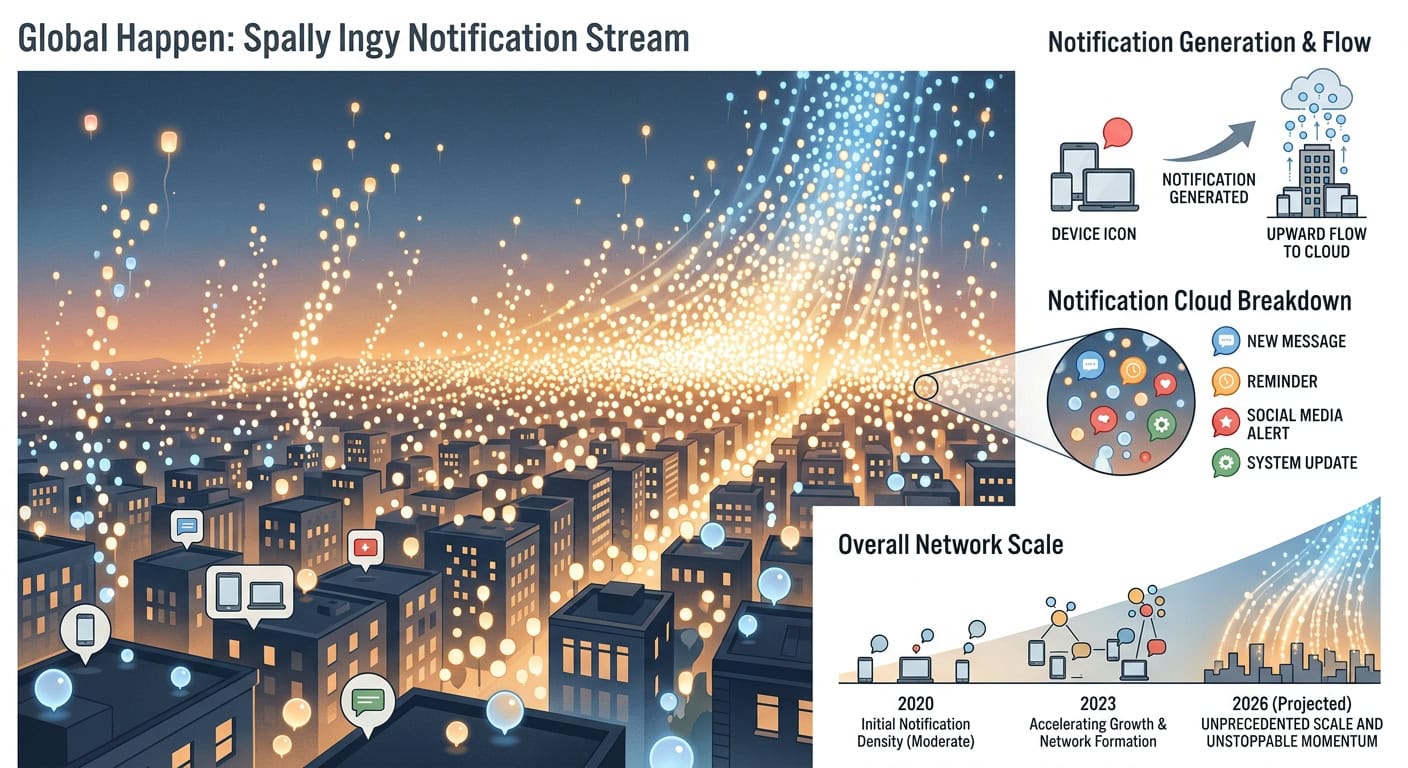
The push notification industry is booming in 2026. The push notification software market grew from $27.91 billion in 2025 to $35.44 billion in 2026. That is a 27% year-on-year jump (The Business Research Company).
The push notification service market is valued at $3.5 billion in 2026. It is projected to reach $14.8 billion by 2033 at a CAGR of 22.9% (LinkedIn Market Report).
The web push notification software segment alone is expected to grow from $2.46 billion to $7.15 billion by 2035 at a CAGR of 11.25% (Market Research Future).
E-commerce brands sent 55% more web push notifications in 2024 than in 2023. Total sends crossed 413 million messages in 2024, up from 266 million the year before (Omnisend). The channel is no longer experimental. It is part of the core marketing stack.
Push Notification Opt-In Rates
Opt-in rates decide how big your subscriber list grows. Here is how the numbers break down.
The overall push notification opt-in rate is 60% across both platforms (Airship). Android has a clear advantage because push notifications are enabled by default. iOS requires users to actively consent.
Opt-In Rates by Platform
Platform | Low (10th percentile) | Median (50th percentile) | High (90th percentile) |
Android | 49% | 81% | 95% |
iOS | 29% | 51% | 73% |
Source: Airship Benchmark Report
Opt-In Rates by Industry (Android)
Finance apps lead the pack on Android with a 96% opt-in rate. Education and medical apps follow closely at around 94%. Social apps score 94% on Android but only 48% on iOS, the biggest gap between platforms.
For web push notifications, opt-in rates typically range from 10% to 15%. This is about 2x higher than the average email newsletter sign-up rate (Gravitec, Sleeknote). Single opt-in prompts can increase sign-ups by over 600% compared to two-step flows .
About 75% of web push subscribers sign up from a mobile browser. Only 20% come from desktop and 5% from tablets.
Push Notification Click-Through Rates (CTR)
The average push notification reaction rate is 4.6% on Android and 3.4% on iOS (Airship).
CTR by Region
Region | Average CTR | iOS CTR | Android CTR |
Europe | 8.5% | 5.5% | 11.4% |
Asia | 8.0% | 5.1% | 10.9% |
North America | 7.0% | 4.2% | 10.8% |
Oceania | 7.7% | 4.7% | 10.6% |
Africa | 7.7% | 4.9% | 10.4% |
South America | 6.9% | 4.4% | 9.3% |
Source: Airship
Europe leads the world. Germany has the highest iOS reaction rate at 12.2%. France has the highest Android reaction rate at 6.3%.
CTR by Day of the Week
Tuesday sees the highest push notification CTR at 8.4%, followed by Sunday at 8.1%. Monday is the lowest because people are not yet ready to engage after the weekend (Airship).
CTR by Time of Day
Afternoon and evening push campaigns get 2x the view rate of morning sends. The best engagement windows are lunchtime (12 pm to 1 pm) and bedtime (9 pm to 11 pm). These are the times when users are most relaxed and willing to interact with their phones (Airship, CleverTap).
Web Push vs Email: How They Compare
Web push outperforms email on several metrics. Here is a side-by-side comparison.
Metric | Web Push | |
Open/View Rate | 45% to 90% | 15% to 30% |
Time to First Open | Near instant (50% clicks within 1 hour) | 6.4 hours average |
Click-to-Conversion Rate | 35% | ~5% (1 in 20) |
Opt-In Friction | One click (no info required) | Requires name and email |
Affected by Ad Blockers | No | No |
Average ROI | 2x to 10x higher than email | Baseline |
Sources: Omnisend, NotifyVisitors, PushPushGo, Sleeknote
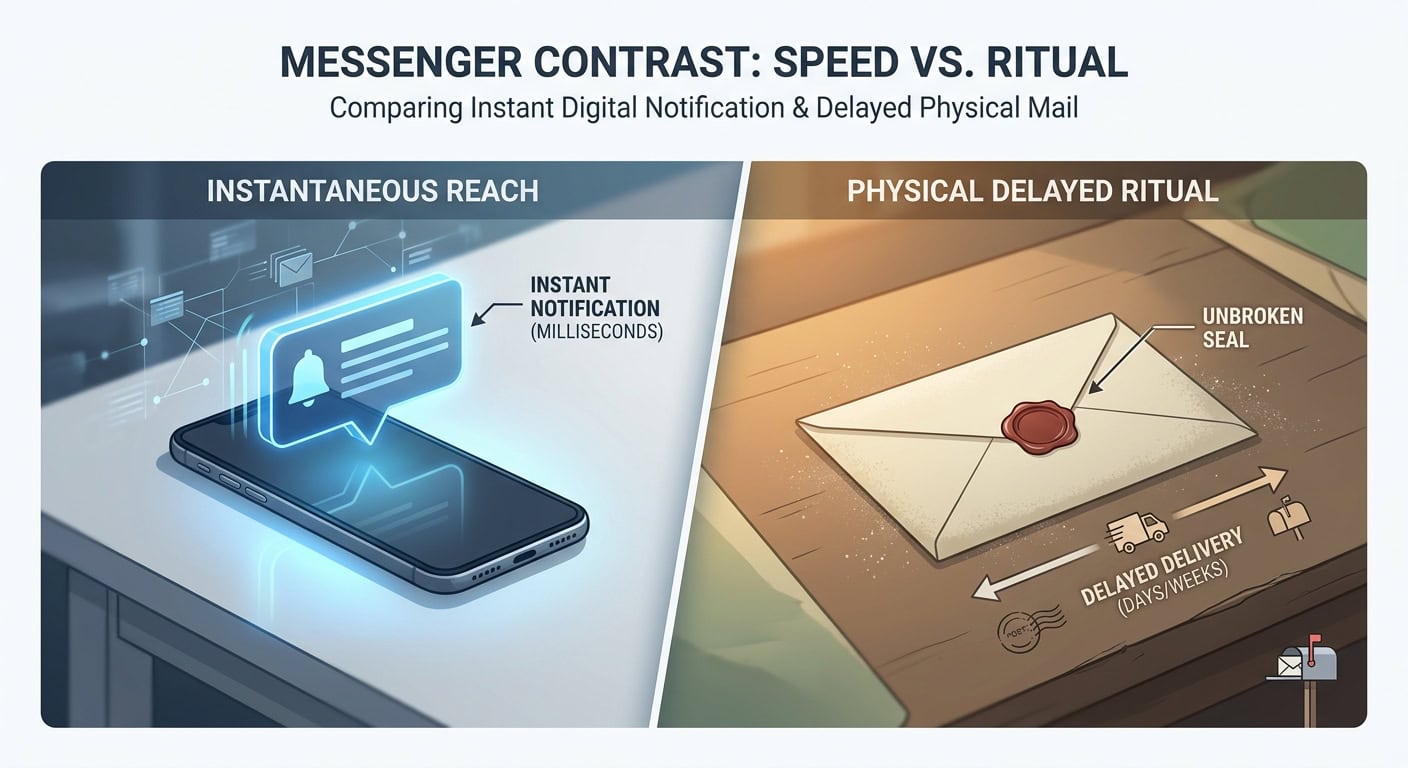
Web push is near-instant. Emails take an average of 6.4 hours to be seen. Only 16% of emails are opened within the first hour. For web push, 50% of all clicks happen within one hour of sending (PushPushGo).
The click-to-conversion rate for web push is 35%. That means 35 out of 100 people who click a promotional web push notification go on to make a purchase. For email, only about 1 in 20 people who click go on to buy (Omnisend).
User Behaviour and Preferences
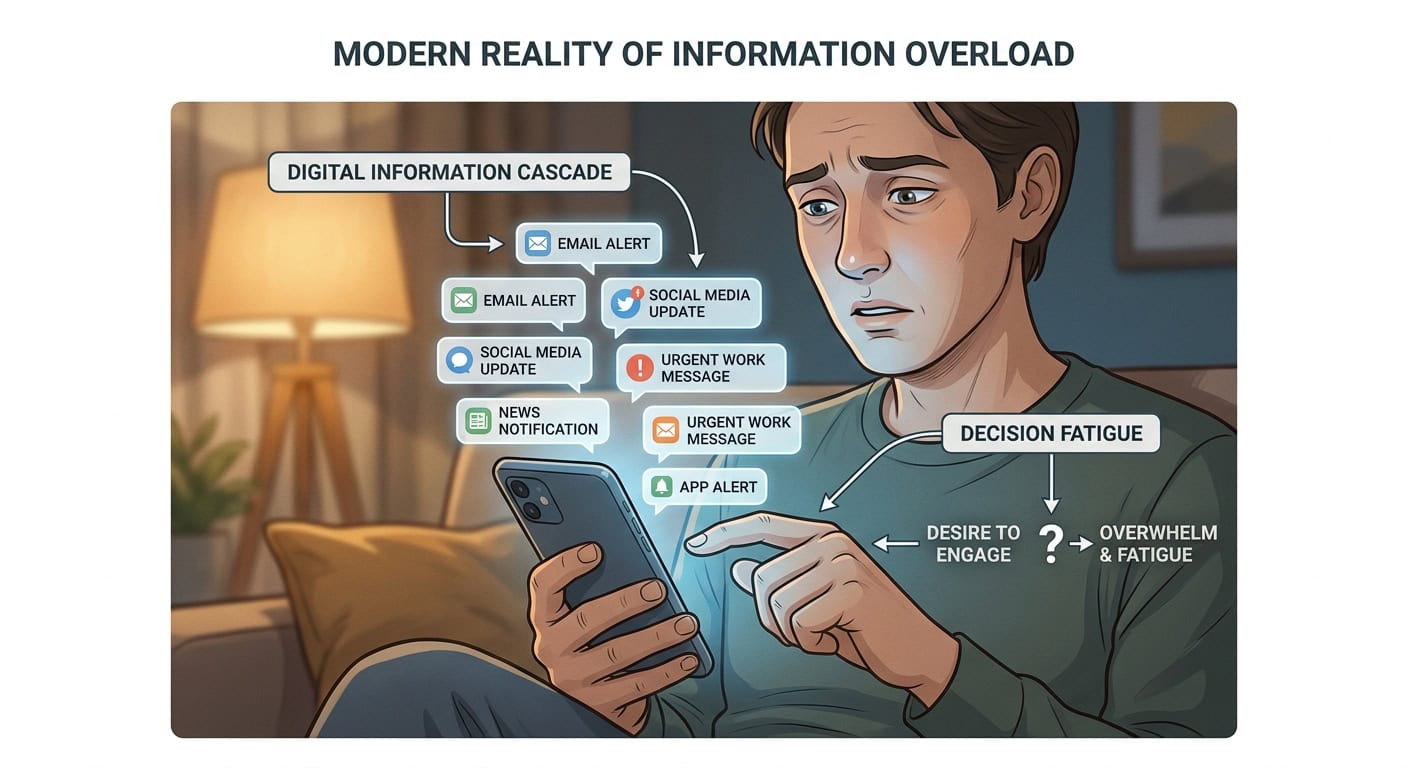
The average US smartphone user receives 46 push notifications per day (CleverTap). That is a lot of messages competing for attention.
What Makes Users Opt Out
Frequency is the biggest factor. 46% of users will opt out if they receive 2 to 5 push messages per week. Even 1 push per week causes 10% of users to disable notifications. At 3 to 6 pushes per week, 40% of users say no more (Helplama, VWO Engage).
62% of subscribers consider push notifications spam when they get too many. 55% say the notifications are irrelevant to them. Another 55% call them clickbait (VWO Engage).
What Users Prefer
Users want push notifications from social media platforms (over 50%), followed by news and information apps. Blogs and publications rank at the bottom with only 9% interest (VWO Engage).
About 57% of users find push notifications useful. 25% are positive but want to choose which apps can send them. The morning, evening, and weekends are the preferred times to receive notifications (VWO Engage).
What Improves Push Notification Performance
There are proven tactics that boost engagement. Here are the numbers.
Personalisation and Targeting
Tactic | CTR Improvement |
Personalisation | 400% (4x increase) |
Advanced targeting | 300% (3x increase) |
Tailored send times | 40% |
Rich formats (images, buttons) | 25% |
Emojis | 20% |
Basic personalisation (name) | 9% |
Source: Airship, CleverTap
Personalisation is the single biggest lever. It improves reaction rates by 4x. Advanced targeting boosts them by 3x. Even basic personalisation like using the subscriber’s name raises open rates by 9% (Airship, CleverTap).
Rich Push Notifications
Rich push notifications with images, GIFs, or video are 7x more effective than plain text notifications (Sleeknote). Over 96% of all e-commerce web push campaigns already use rich notifications (Sleeknote). VWO Engage data shows rich push CTR at 9.2% compared to 6.9% for simple text.
Short Copy Works Best
Push notifications with fewer than 10 words get nearly 2x the engagement. Emojis can increase open rates by up to 85%. The best-performing push messages read like headlines, not full sentences (Sleeknote, CleverTap).
Segmentation Matters
Sending targeted push notifications gives a retention rate of 39% at 11+ sessions. Broadcast messages achieve only 21% retention (Localytics). Media and publishing sites see CTR jump from 8.7% to 13.7% with segmentation. BFSI jumps from 8.7% to 13.8% (VWO Engage).
Push Notifications and App Retention
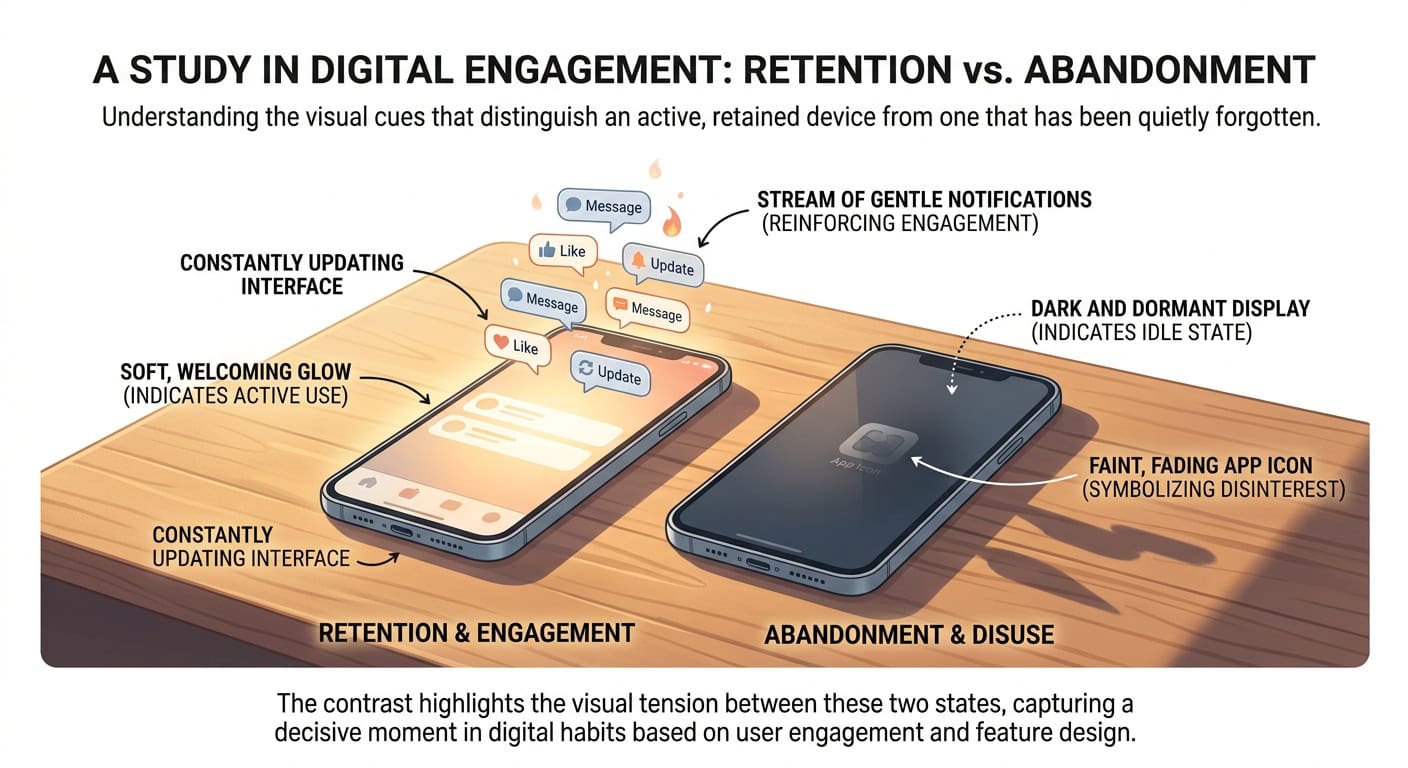
Push notifications have a direct impact on whether users stick with an app.
Users who opt in to push notifications have much higher retention rates. 46% remain beyond 11 sessions. Users who do not enable push notifications lose nearly half their audience after just 2 sessions (Localytics).
On the flip side, 6% of users will uninstall an app after receiving just 1 push notification per week. This figure has stayed consistent since 2015 (Upland).
The average number of apps people open monthly is declining. It was 21 in 2020 and is expected to drop to 19.7 by 2026 (eMarketer). This makes each push notification more valuable as competition for attention grows.
Industry Breakdown
E-commerce is the number one vertical for web push. It represents 22% of all browser push sends. Media, publishing, and blogging account for another 18%. Together, these two sectors make up 40% of all push notification usage (VWO Engage).
85% of online stores now use push notifications in their marketing (NotifyVisitors). The most common use in e-commerce is announcing offers and discounts (83.3%), followed by new product announcements (50%) and time-bound offers (33.3%) (VWO Engage).
FAQs
What is a good push notification opt-in rate in 2026?
A good opt-in rate ranges from 5% to 15% depending on industry and platform. Android typically sees 81% median opt-in. iOS sees 51%. For web push, 10% to 15% is considered strong (Airship, Gravitec).
How often should I send push notifications?
Keep it under 2 to 5 per week. Going beyond this causes 46% of users to opt out. For most industries, 2 to 3 targeted messages per week deliver the best CTR without causing subscriber fatigue (Helplama, VWO Engage).
What is the average CTR for push notifications?
The global average is 4.6% on Android and 3.4% on iOS. Europe leads with an 8.5% average. Personalised and segmented notifications can push CTR above 13% (Airship, VWO Engage).
Do push notifications work better than email?
For time-sensitive messages, yes. Web push has 45% to 90% view rates compared to 15% to 30% for email. The click-to-conversion rate is 35% for push versus about 5% for email. But email remains better for long-form content and nurturing (Omnisend, NotifyVisitors).
How big is the push notification market?
The push notification service market is valued at $3.5 billion in 2026 and is projected to reach $14.8 billion by 2033. The broader push notification software market stands at $35.44 billion in 2026 (The Business Research Company, LinkedIn Market Report).
What type of push notification performs best?
Rich push notifications with images and a clear CTA outperform plain text by 7x. Personalised, segmented messages achieve 4x higher engagement than broadcast sends. Short copy with fewer than 10 words gets the best results (Sleeknote, Airship, CleverTap).
Quick Links