
Artificial intelligence is no longer a tool affiliates use to speed up content creation. It has moved into the operational core of how campaigns are run, how commissions are structured, and how brands identify partners before they ever become famous. This is a significant shift, and understanding it is the difference between staying relevant and getting automated out of the picture entirely.
AI is taking over content generation, campaign optimization, performance forecasting, and compliance checking in affiliate marketing. It is also enabling dynamic commission structures and helping brands identify creator partners before they go viral. The biggest winners are affiliates who use AI to work smarter — not those who use it to produce generic, low-quality content at scale.
That last sentence deserves attention. The fear in the affiliate community is that AI will replace affiliates entirely. The reality is more nuanced — AI is replacing the parts of affiliate marketing that were never that valuable to begin with.
Bulk content production, keyword stuffing, templated reviews, copy-paste coupon pages — all of that is getting automated. What is not getting automated is judgment, real-world product testing, trusted audience relationships, and the kind of editorial voice that makes readers trust a recommendation.
Content Outline
Dynamic commissions are changing the game
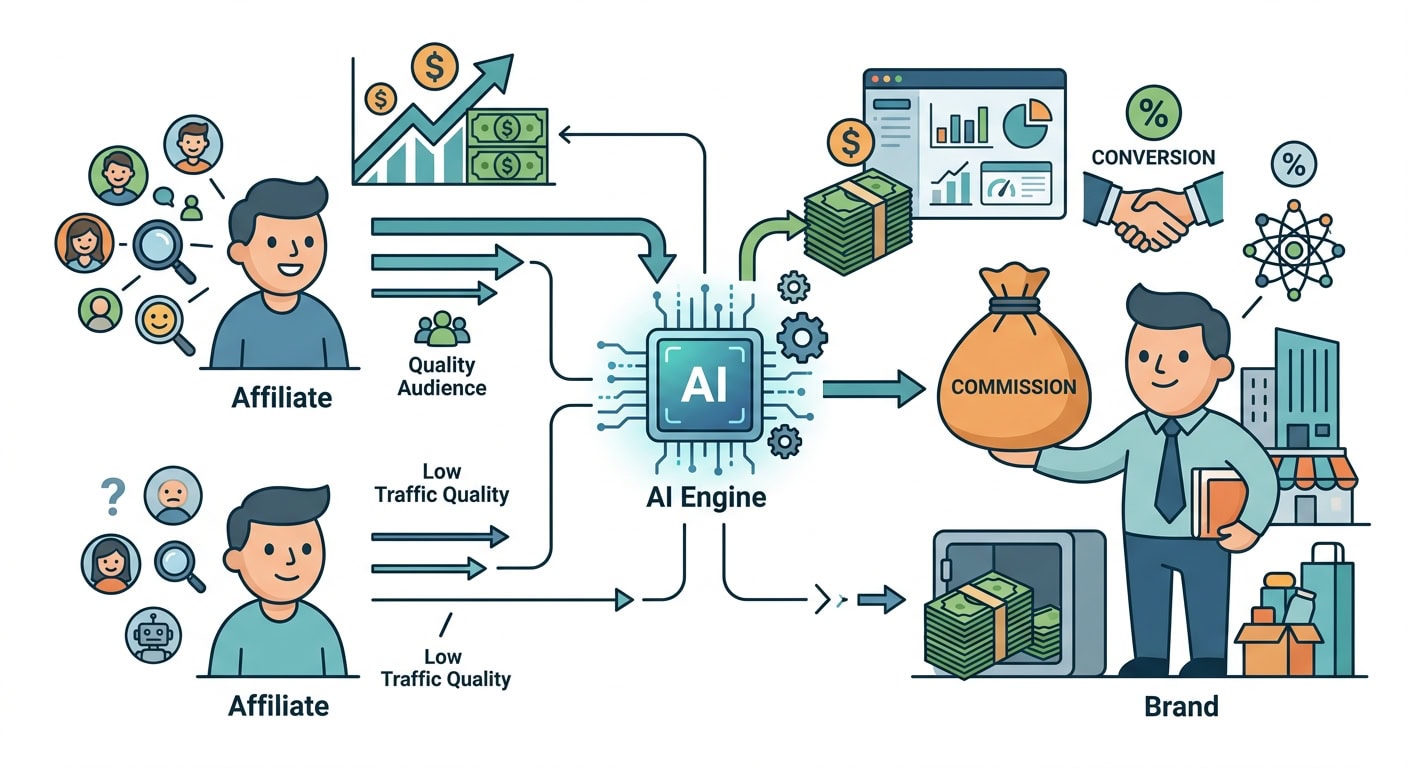
One of the most underreported developments in affiliate marketing right now is AI-driven dynamic commission structures. Traditionally, affiliate programs offered a flat rate — 10% on sales, or $5 per lead. AI is making it possible for brands to adjust commissions in real time based on traffic quality, conversion rate, audience overlap, and campaign timing.
This means high-quality affiliates are getting paid more, and low-quality traffic sources are being cut off automatically. If you are driving real, engaged traffic that converts, your earning potential just went up. If you have been gaming the system with thin traffic, the window is closing fast.
Brands working with direct partners report 30–40% higher conversion rates versus network relationships. Authority trumps audience size in 2026. This is exactly the environment dynamic commissions are designed to reward. Brands are willing to pay significantly more per conversion when they can verify the quality of the audience sending them traffic.
What this means for your strategy
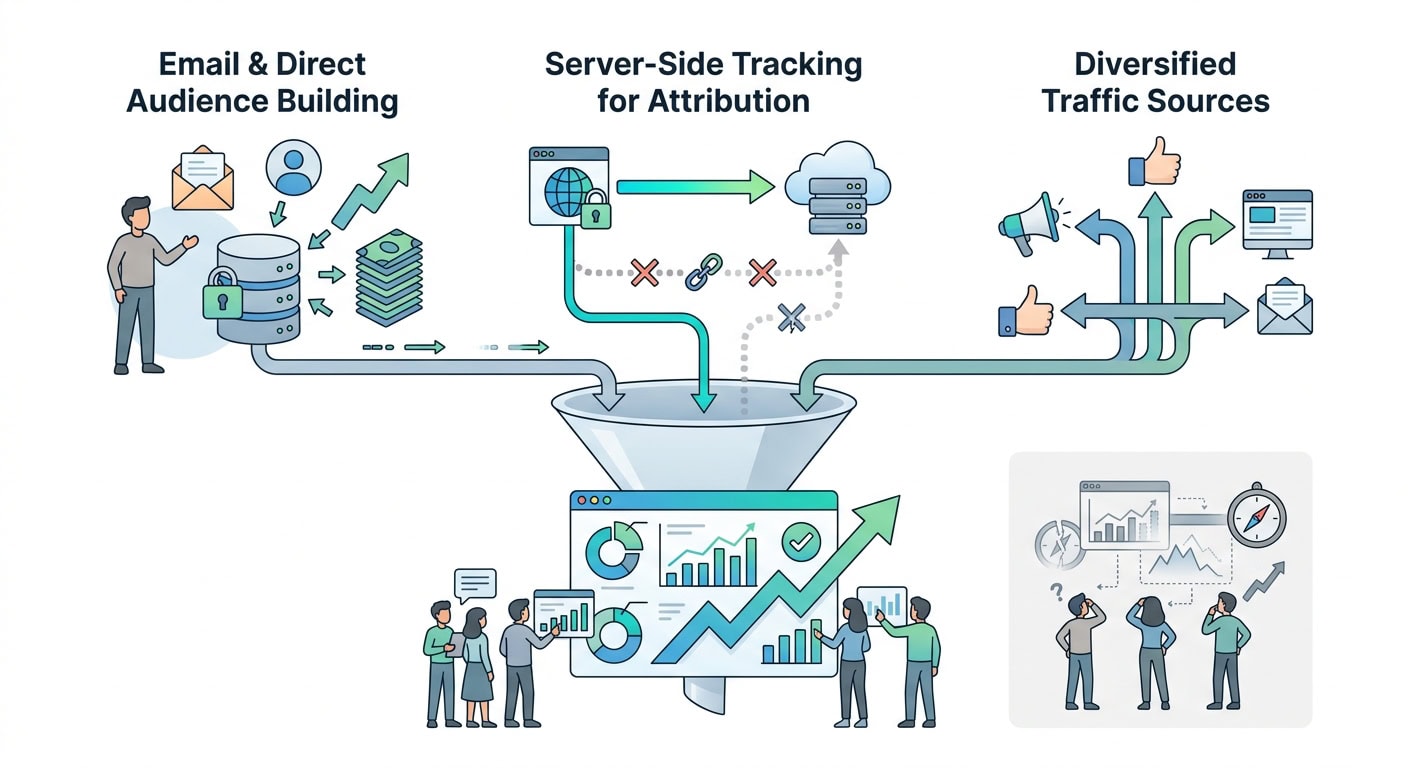
Building first-party data through email lists and direct audiences, adopting server-side tracking for attribution accuracy, and diversifying across multiple traffic sources are the core strategies that outperform everything else. Affiliates who track their performance data accurately and make data-driven optimization decisions will outperform those who rely on outdated methods.
💬 Quora signal: “How do I use AI in affiliate marketing without getting penalized?” ranks among the most-viewed questions in the digital marketing section on Quora right now. The consistent answer from top contributors is to use AI for research, structure, and competitor analysis — but to write the actual value proposition yourself, with genuine product knowledge.
🐦 Twitter/X signal: Affiliate marketers on X are sharing income screenshots that show a clear pattern: those who shifted to tight-niche authority content in 2025 are seeing 2026 revenue growth. Those who leaned into AI bulk content are reporting significant traffic losses. The data is pointing in one direction.
The window to adapt is still open, but it is not going to stay open forever. The affiliates who will dominate the next three years are the ones who pair AI efficiency with genuine expertise — using automation to do more of the low-value work so they can spend more time on the high-value things machines cannot replicate.
Quick Links: