
The creator economy is worth more than most countries’ annual GDP. It is also an industry where more than half of participants earn under $15,000 a year.
Both of those things are true simultaneously. The creator economy in 2026 is massive at the top, crowded in the middle, and brutal at the bottom — and understanding which tier you are operating in (or helping clients operate in) requires honest data rather than industry optimism.
This article compiles 65+ statistics on market size, platform revenue, creator earnings by tier, brand deal rates, and where affiliate marketing fits within the broader creator income picture.
Content Outline
Key Creator Economy Statistics 2026
Metric | Number |
Global creator economy market size (2026 estimate) | $205–$314 billion |
Goldman Sachs TAM projection (2027) | ~$480 billion |
Active content creators globally | 207–303 million |
Full-time creators earning a living | ~2 million (under 1%) |
Creators earning over $100,000/year | ~4–5.7% |
Creators earning under $15,000/year | Over 50% |
Creator middle class ($10K–$100K/year) | 45.6% |
Average full-time creator earnings | $51,217/year |
Average monthly affiliate earnings (top performers by niche) | $8,038/month |
Brand deals share of total creator revenue | ~70% |
Creators using generative AI tools | 86% |
Influencer marketing industry size | $32.55 billion |
YouTube total revenue (2025) | $60 billion |
YouTube payments to creators (3-year total) | $70+ billion |
TikTok Shop US sales (2025) | $15.82 billion |
Meta payments to creators (2025) | ~$3 billion |
Brands reporting effective influencer campaigns | 83% |
Market Size: The Numbers and Why They Vary
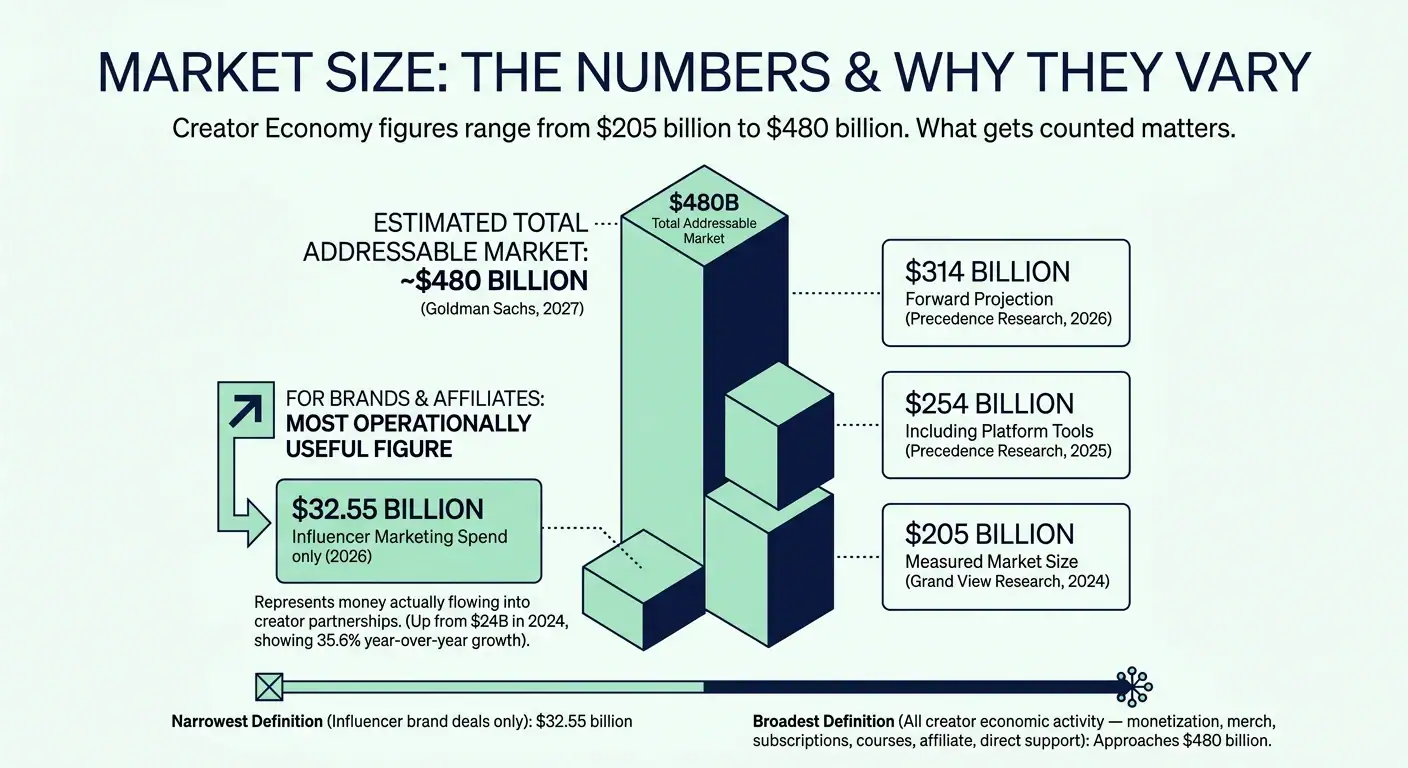
Market size figures for the creator economy range from $205 billion to $480 billion depending on the source and methodology. Here is what each figure actually measures:
Source | Figure | What It Covers |
Grand View Research (2024) | $205 billion | Measured market size |
Precedence Research (2025) | $254 billion | Including platform tools |
Precedence Research (2026) | $314 billion | Forward projection |
Goldman Sachs (2027) | ~$480 billion | Total addressable market |
Influencer marketing only | $32.55 billion | Brand sponsorship spend |
The variation reflects what gets counted. The narrowest definition (influencer brand deals only) is $32.55 billion. The broadest (all creator economic activity — content monetisation, merchandise, subscriptions, courses, affiliate, direct support) approaches $480 billion.
For brands and affiliates, the most operationally useful figure is the influencer marketing spend: $32.55 billion in 2026 — up from $24 billion in 2024, representing 35.6% year-over-year growth. This is the money actually flowing into creator partnerships.
Creator Earnings: The Real Distribution
This is the number most platforms do not advertise: more than 50% of all creators earn under $15,000 per year.
Earnings distribution among active creators:
Annual Earnings Tier | Share of Creators |
Under $10,000 | 48.7% |
$10,000–$100,000 (middle class) | 45.6% |
Over $100,000 | ~4–5.7% |
Over $1 million | Tiny fraction |
The “creator middle class” — earning $10K–$100K annually — now represents nearly half of all committed creators. This is the Influencer Marketing Factory’s 2026 report finding, based on 1,000 US creators surveyed in January 2026. It represents a genuine structural improvement from earlier years when the earnings distribution was even more top-heavy.
Average earnings by source:
Full-time creator average: $51,217/year
Average monthly earnings (all channels combined, motivated creators): $8,038/month
Top niche performers (e-learning): $15,551/month
The $8,038/month figure is for creators actively monetising across multiple channels. The median is significantly lower. These averages are pulled upward by high performers.
Revenue Streams: How Creators Actually Make Money
Brand deals dominate — but the picture is more diversified than ever.
Creator revenue breakdown (2026 survey data):
Ad revenue (YouTube, display): 21.6%
Brand partnerships: largest category overall
Product/merchandise sales: part of the 21.2% combined with affiliate
Affiliate marketing: growing share of the 21.2% combined
Subscriptions/memberships: Significant minority
Passive income streams: Over 20% of total creator income
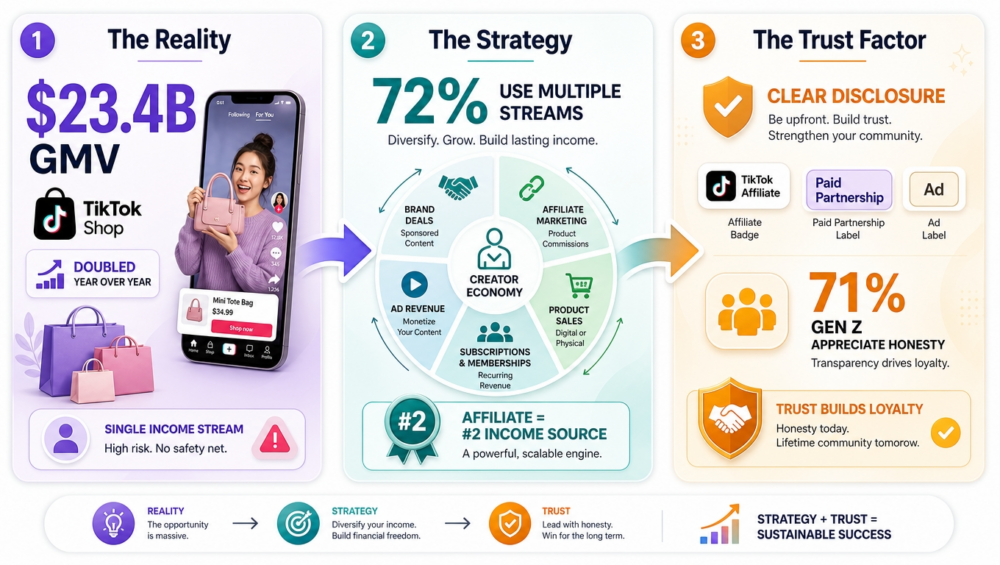
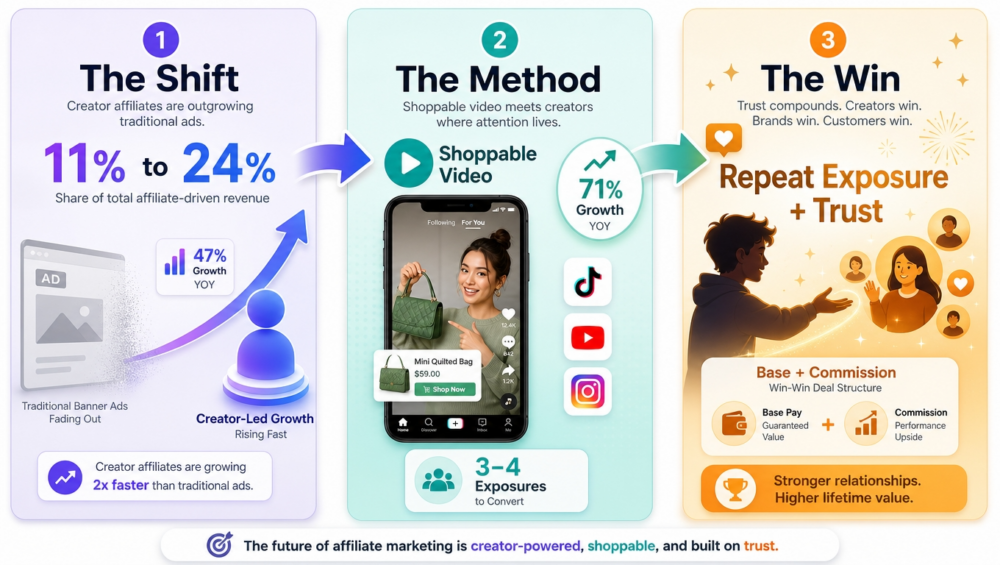
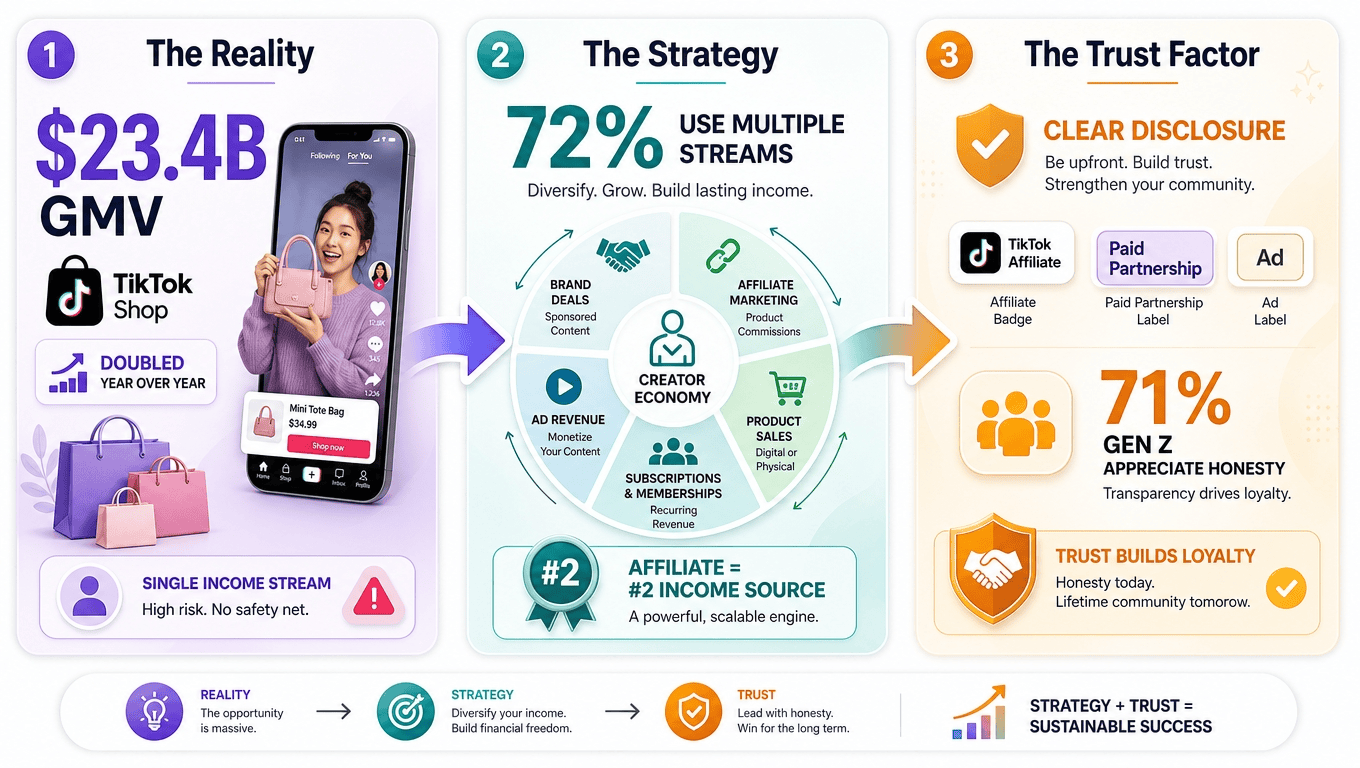
Affiliate marketing and product sales now represent a combined 21.2% of creator income. This is a deliberate move toward self-owned revenue that does not depend on brand relationships or platform algorithm changes. The creators growing most stably are the ones who have built affiliate and product income alongside brand deal income.
The platform payment landscape:
YouTube paid over $70 billion to creators over the last three years
YouTube generated $60 billion in total revenue in 2025 — 33% more than Netflix
Meta paid ~$3 billion to creators in 2025, up 35% (60% going to Reels)
TikTok Shop reached $15.82 billion in US sales in 2025
Platform Revenue Shares: What Each Platform Pays
Understanding how platforms split revenue with creators is fundamental for any affiliate or creator strategy.
Platform | Revenue Share | Notes |
YouTube | 55% to creator | On AdSense; higher on channel memberships |
TikTok Shop | Up to 80% | Commission-based on sales |
Patreon | 88–95% | After platform fees |
Twitch | 50% (standard), 70% (top partners) | On subscriptions |
OnlyFans | 80% | After 20% platform cut |
Variable | Reels bonuses + brand deal facilitation |
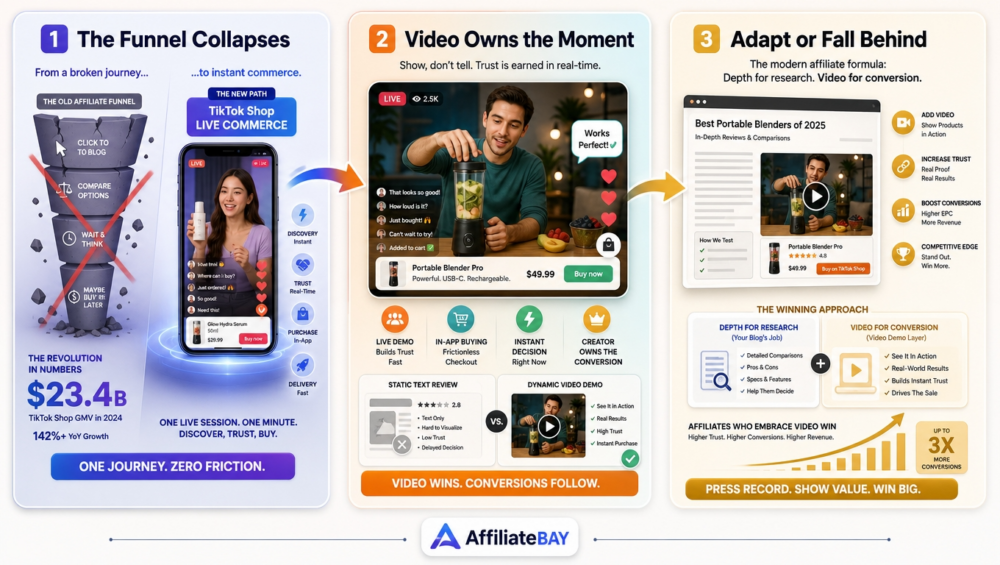
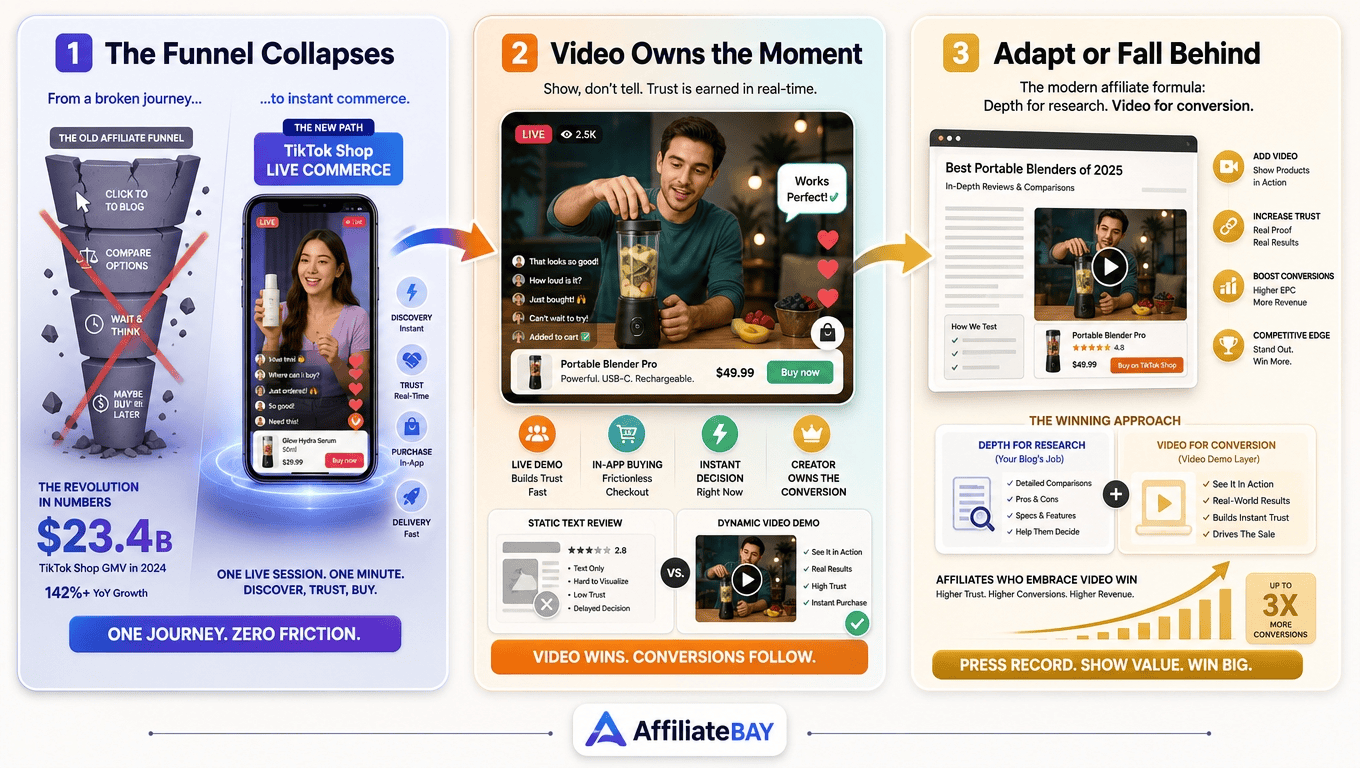
TikTok Shop commissions typically range 5–20% per sale for creators — and TikTok Shop is reshaping affiliate commerce. US TikTok Shop e-commerce sales are projected to reach $23.4 billion in 2026 — a 48% year-over-year increase. Creators who tag products during content and link to purchase are earning some of the highest conversion rates in the affiliate space right now.
AI in the Creator Economy: 86% Are Already Using It
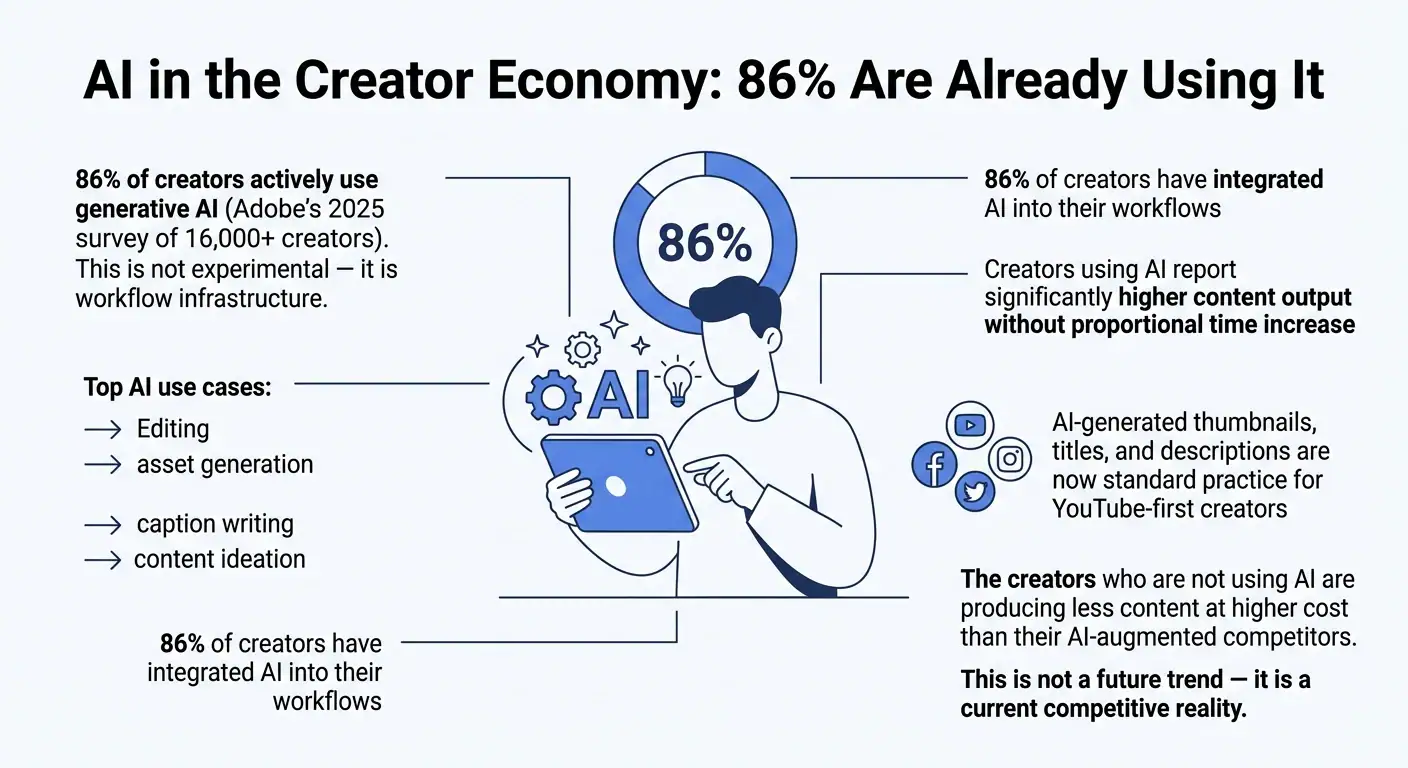
86% of creators actively use generative AI (Adobe’s 2025 survey of 16,000+ creators). This is not experimental — it is workflow infrastructure.
Top AI use cases: Editing, asset generation, caption writing, content ideation
86% of creators have integrated AI into their workflows
Creators using AI report significantly higher content output without proportional time increase
AI-generated thumbnails, titles, and descriptions are now standard practice for YouTube-first creators
The creators who are not using AI are producing less content at higher cost than their AI-augmented competitors. This is not a future trend — it is a current competitive reality.
Brand Deals: Rates, Tiers, and What Brands Actually Pay
Creator Tier | Followers | Instagram Rate per Post | Notes |
Nano | 1K–10K | $10–$100 | 39% of brands partner here |
Micro | 10K–100K | $100–$1,000 | 52.83% expansion intent |
Mid-tier | 100K–500K | $1,000–$5,000 | Growing but mixed trend |
Macro | 500K–1M | $5,000–$10,000 | Declining brand preference |
Mega | 1M+ | $10,000+ | Lowest engagement rates |
The micro-influencer advantage (2026 data):
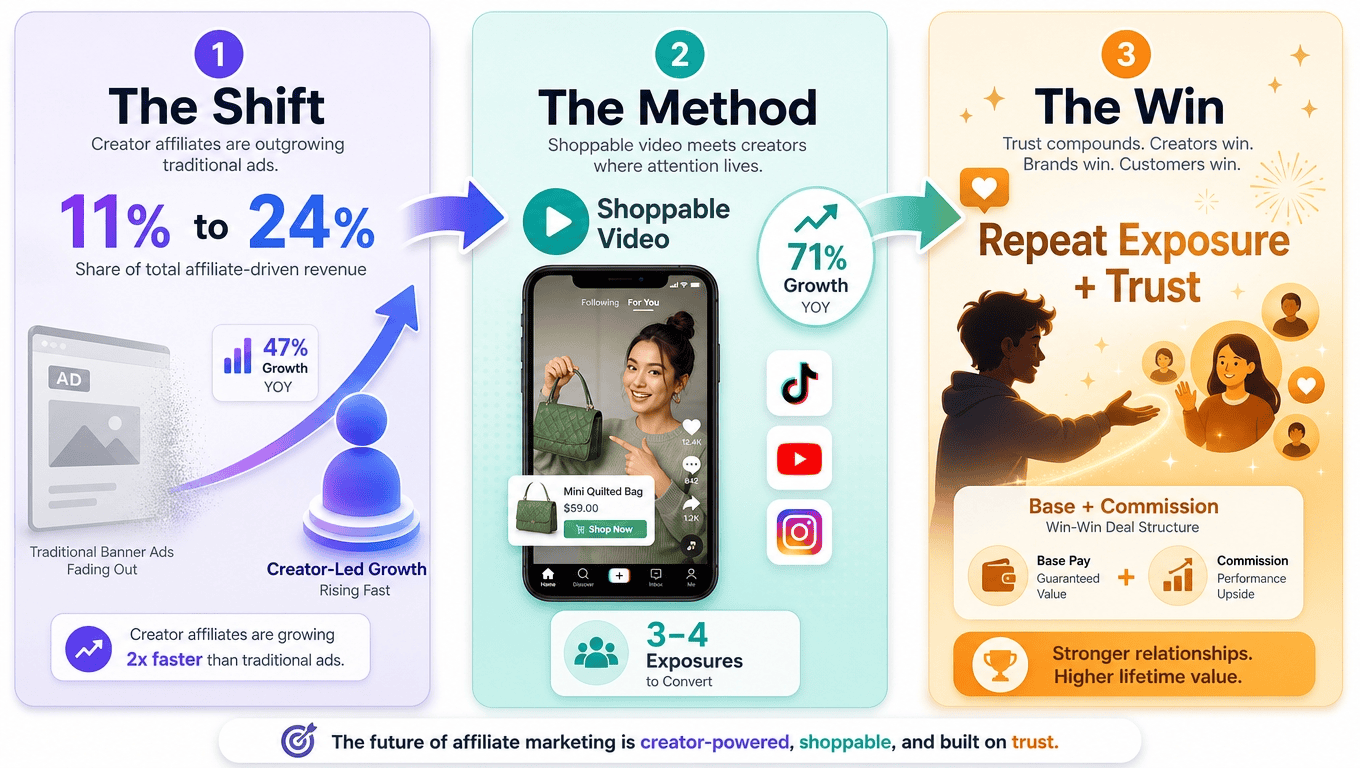
Micro-influencers deliver 3.2x higher engagement at 60% lower cost than mega-influencers
Nano-influencers achieve 10.3% engagement on TikTok — significantly higher than larger accounts
73% of brands now prefer working with micro and mid-tier creators
52.83% of brands are expanding (not just maintaining) their micro-influencer activity in 2026
Gifted partnerships deliver 2.19% engagement — 12.9% higher than paid collaborations
The data is unambiguous: smaller creators with engaged niche audiences consistently outperform larger creators on the metrics that drive actual conversions. The brands that still spend primarily on celebrity and mega-influencer partnerships are doing so for brand awareness, not performance.
Creator Mental Health: The Number Nobody Talks About
The creator economy growth statistics exist alongside a parallel reality:
71% of creators report feeling burnout or emotional exhaustion at some point
Nearly 60% spend 5+ hours per week on content production alone (before editing, distribution, or business management)
The income volatility inherent to creator income — dependent on brand deals, platform changes, and algorithm shifts — creates financial stress that pure earnings figures do not capture
For brands building creator partnerships: long-term ambassador relationships rather than one-off campaigns reduce this volatility for creators and deliver better ROI. For creators building affiliate income: recurring commission structures from SaaS and subscription products reduce income volatility more effectively than one-time product commissions.
FAQs
The creator economy is valued between $205 billion and $314 billion in 2026 depending on methodology. Goldman Sachs projects the total addressable market will approach $480 billion by 2027, with the influencer marketing segment alone reaching $32.55 billion.
Only 4–5.7% of creators earn over $100,000 per year, while more than half earn under $15,000 annually. Full-time creators average $51,217 per year across all income sources combined.
Yes — affiliate and product sales now account for 21.2% of combined creator revenue, making it one of the fastest-growing income sources. SaaS affiliate programs offering recurring commissions of around 22.5% of first-year revenue provide the most stable long-term earnings for creators with the right audience.
YouTube remains the top platform for sustainable creator income, having paid over $70 billion to creators over three years. TikTok Shop is the fastest-growing earning opportunity for product-focused creators, generating $15.82 billion in US sales in 2025.
The creator middle class is defined as those earning between $10,000 and $100,000 per year, and it now represents 45.6% of all active creators. This segment has grown significantly as more creators diversify across multiple income streams including sponsorships, affiliate marketing, and digital products.