
The gig economy is no longer a side hustle trend. It is a fundamental part of the global labour market. In 2026, approximately 435 million people worldwide work in the gig economy. In the United States alone, over 83 million Americans freelance.
This article covers the most important gig economy statistics for 2026. We use data from Statista, the World Economic Forum, McKinsey, ILO, NITI Aayog, Upwork, and government sources. We cover global market size, worker population, earnings, satisfaction, benefits challenges, and regional breakdowns.
Whether you are a gig worker, employer, investor, or policymaker, these numbers paint a clear picture of where the gig economy is headed.
Content Outline
Gig Economy Market Size 2026
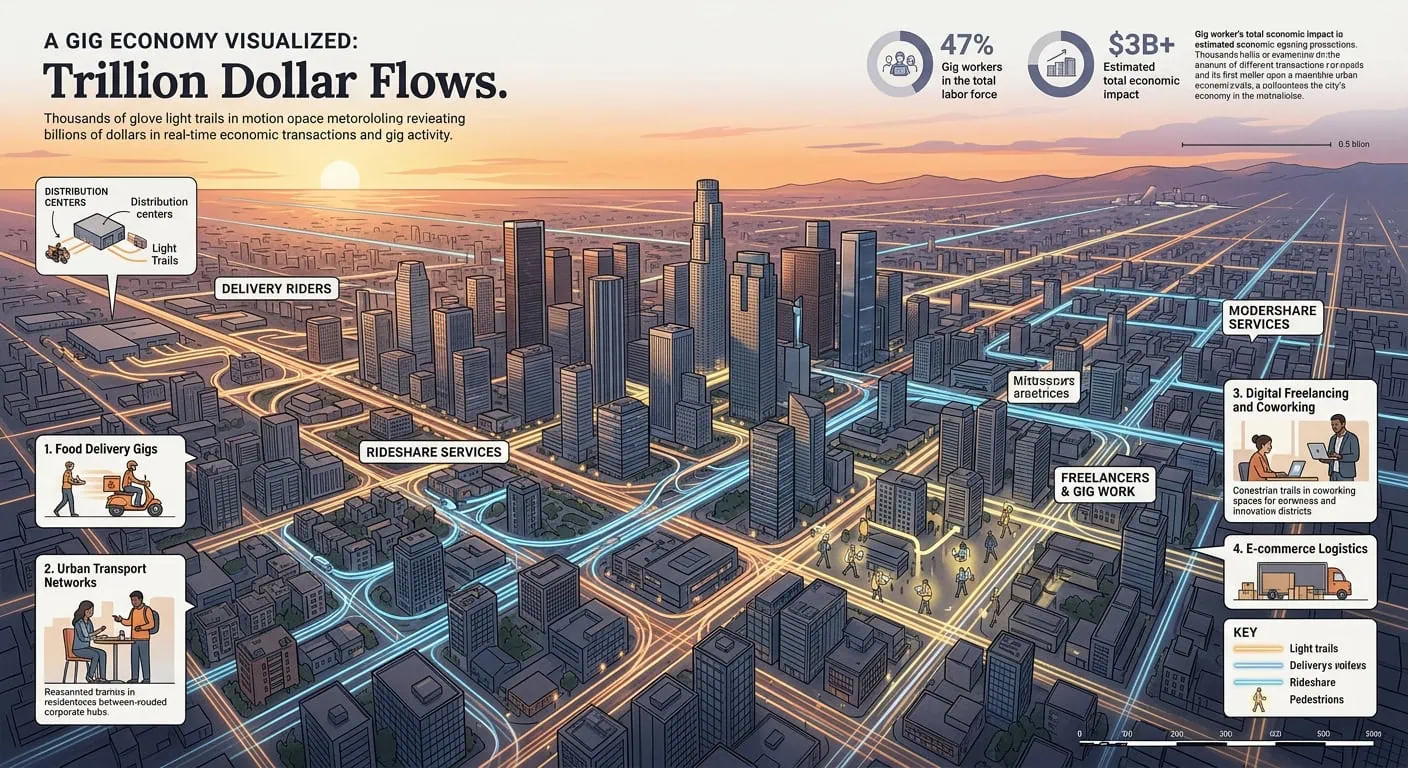
The gig economy is a multi-trillion dollar market globally.
The global gig economy had a market size of $556.7 billion in 2024.
The gig economy market is expected to reach $497.9 billion by 2032, growing at a CAGR of 1.9% from 2026 to 2032 based on platform revenue models.
The US gig economy is estimated at $455 billion in 2026.
US freelancers contributed $1.5 trillion in earnings in 2024.
The gig economy platform market was valued at $9.28 billion in 2025 and is expected to reach over $40 billion by 2033, representing a 15.64% CAGR.
The global freelance platform market is valued at $9.91 billion in 2026.
Global Gig Worker Population Stats 2026
Gig work is massive and growing across every continent.
Approximately 435 million people worldwide work in the gig economy.
Online gig workers form 4.4% to 12.5% of the global labour force, depending on how broadly gig work is defined.
154 to 435 million people worldwide work via online gig platforms. The wide range reflects different definitions of gig work.
Region | Gig Worker Estimate |
United States | 83 million+ |
India | 15 million+ (projected 23.5M by 2030) |
Brazil | 15 million+ |
United Kingdom | 4.2 million |
European Union | 28 million+ |
US Gig Economy Stats 2026
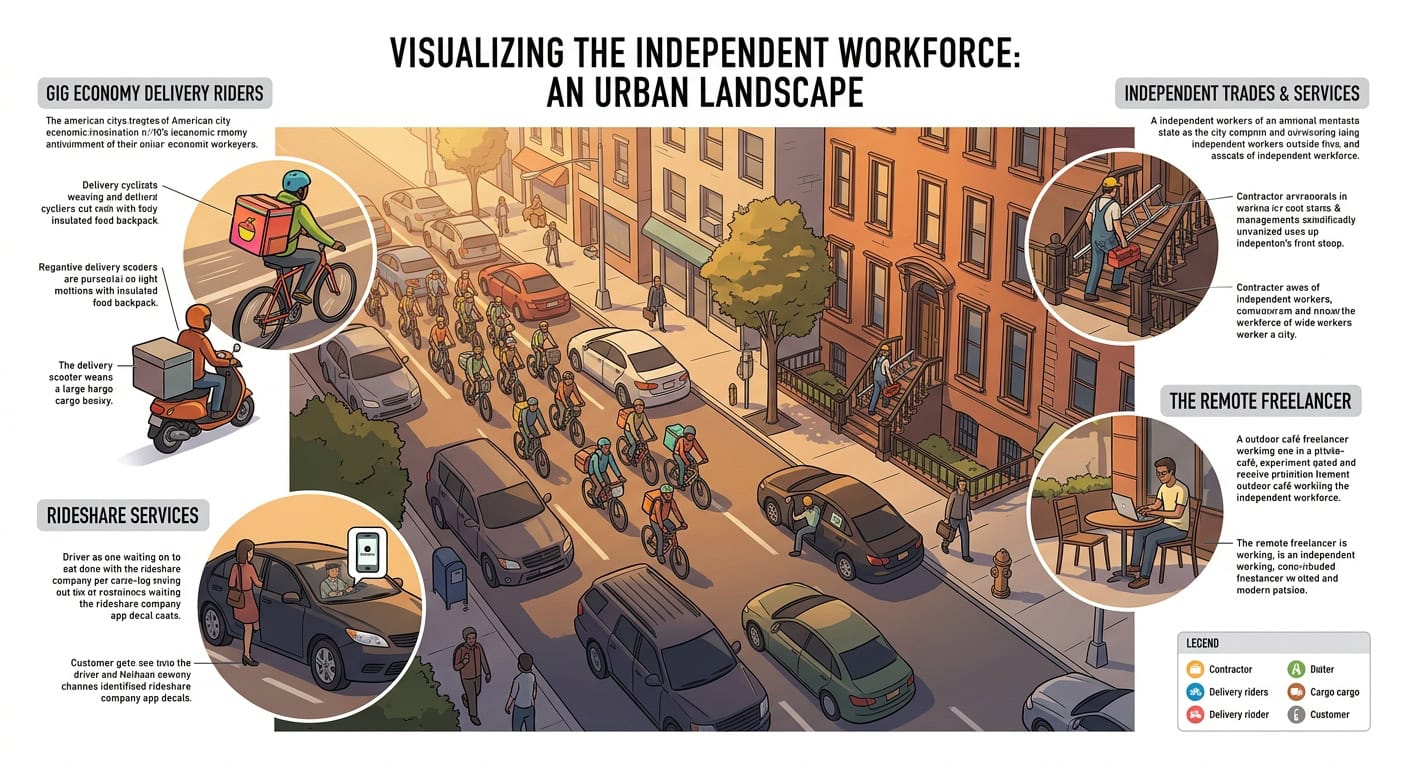
The United States has the world’s most developed gig economy.
Over 83 million Americans work freelance in 2026. That is approximately 45% of the US workforce.
More than 90% of Americans would consider freelancing or independent contracting.
28% of skilled knowledge workers in the US participate in gig work.
The US gig workforce contributed $1.5 trillion in earnings in 2024.
73 million Americans participate in some form of gig work in the US, representing about 45% of the labour force.
India Gig Economy Stats 2026
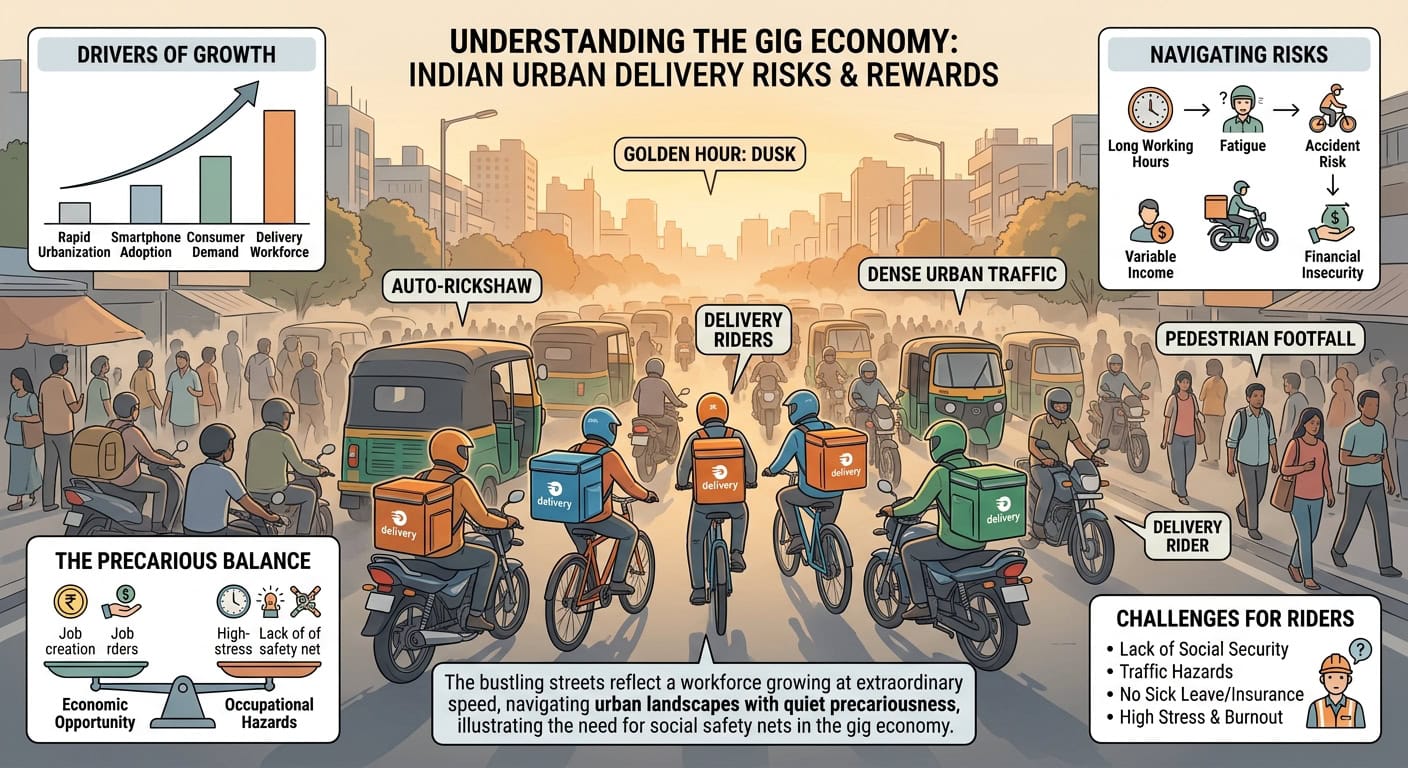
India’s gig economy is growing faster than regulations can keep up.
NITI Aayog estimates 7.7 million gig workers in India in 2020-21. This is projected to reach 23.5 million by 2029-30.
India’s Economic Survey 2025-26 projects non-agricultural gig work could reach 6.7% of the total workforce.
The share of high-skilled gig workers in India is expected to reach 27.5% by 2030. Most current gig work is medium-skilled (delivery, driving, etc.).
India’s Parliament Committee called for stronger gig worker protections in March 2026.
India’s gig economy is growing faster than its protections. Workers face job insecurity, lack of benefits, and limited regulatory oversight.
Gig Worker Earnings Stats 2026
Gig worker earnings vary massively based on skill level, geography, and platform.
Freelancers earn about $28 per hour on average globally.
The average US gig worker earns $36 per hour. Top earners in tech, consulting, and finance earn $100+ per hour.
Full-time B2B freelancers work approximately 43 hours per week on average. 54% work five days a week.
88% of gig workers report having to take on more jobs to make ends meet.
Almost half of gig workers say their income does not keep up with rising costs.
Earnings Metric | Stat |
Global average hourly rate | $28 |
US average hourly rate | $36 |
Full-time gig workers’ average weekly hours | 43 |
Workers needing more jobs to make ends meet | 88% |
Gig Worker Satisfaction and Challenges 2026
Gig workers report high satisfaction but also face significant challenges.
80% of gig workers say they are satisfied with gig economy work.
But 96% of gig workers want access to permanent jobs with benefits. Satisfaction with flexibility does not eliminate the desire for stability.
91% of gig workers report difficulty finding permanent employment.
More than 60% of full-time employees say they want to switch to gig jobs. The grass-is-greener effect works both ways.
The preference for traditional employment among full-time gig workers has dropped from 34% in 2012 to 22% in 2018. This trend continues into 2026.
Top Challenges for Gig Workers
Irregular income and cash flow uncertainty
No employer-provided health insurance
No retirement benefits or pension
No paid sick leave or vacation
Complex tax filing requirements
Limited access to credit and loans
No career growth path within platforms
Gig Economy by Industry 2026
Gig work spans virtually every industry.
The top industries for gig work in 2026 are technology and IT services, transportation and delivery, creative and marketing services, professional consulting, healthcare (telehealth), education and tutoring, and financial services.
Ride-sharing and delivery platforms (Uber, DoorDash, Swiggy, Zomato) employ the largest number of gig workers globally.
Knowledge work (software development, data science, consulting) is the fastest-growing gig segment.
AI is both creating and threatening gig jobs. While AI writing tools reduce the demand for entry-level content writers, they simultaneously increase the need for AI prompt engineers and trainers.
Gig Economy Regulation Trends 2026
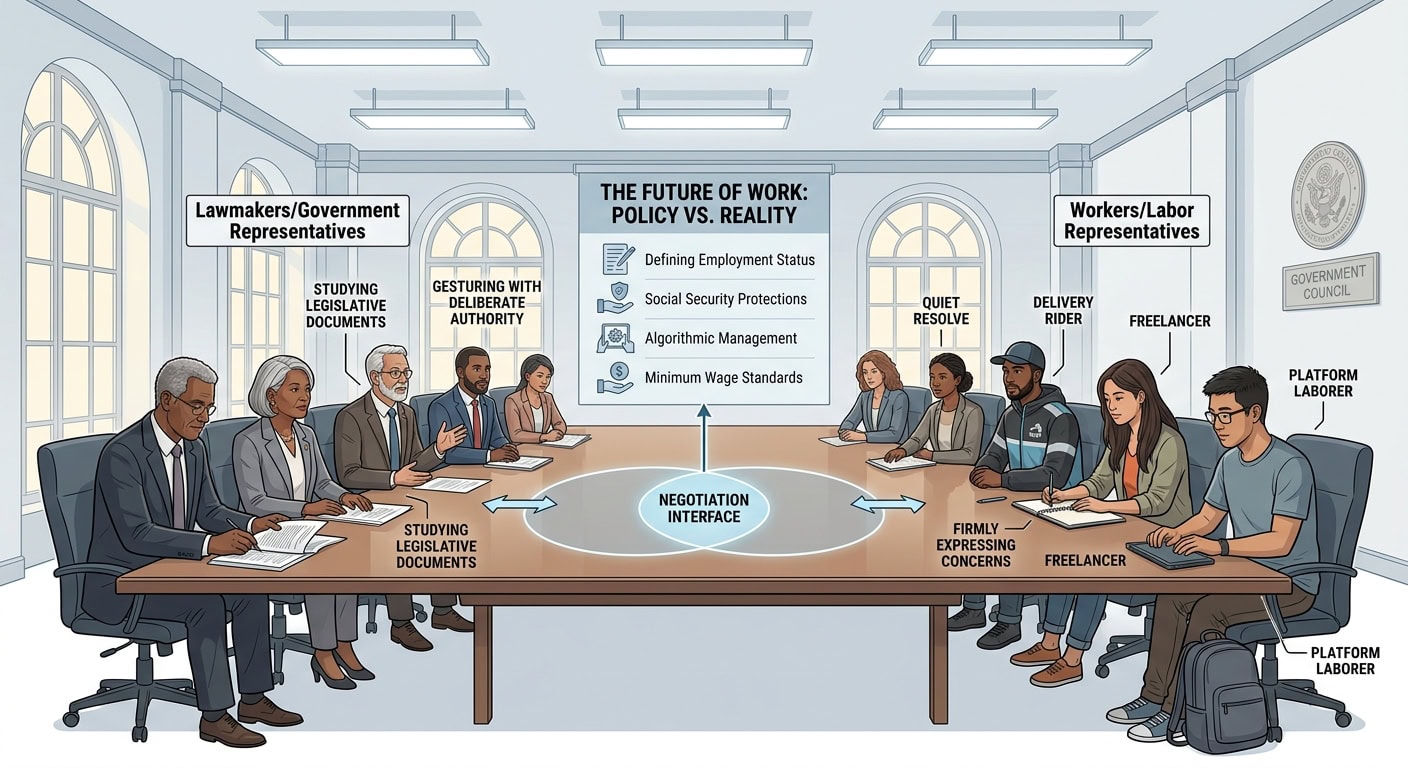
Governments worldwide are grappling with how to regulate gig work.
India’s Parliament Committee recommended stronger protections for gig workers in March 2026. Currently, India has no comprehensive gig worker protection law.
The EU’s Platform Work Directive was adopted to improve conditions for platform workers. It creates a presumption of employment for gig workers meeting certain criteria.
California’s AB5 law and similar state-level regulations in the US continue to shape how gig workers are classified.
The ILO has called for universal social protection for gig workers worldwide.
FAQs
How many gig workers are there worldwide in 2026?
Approximately 435 million people work in the gig economy globally. Online gig workers form 4.4% to 12.5% of the global labour force. In the US alone, over 83 million Americans freelance, representing about 45% of the workforce.
How much do gig workers earn?
The global average is about $28 per hour. In the US, the average is $36 per hour. However, 88% of gig workers report needing more jobs to make ends meet, and almost half say their income doesn’t keep up with rising costs. Earnings vary enormously based on skill, location, and platform.
Is the gig economy growing or shrinking?
Growing significantly. The global gig economy was valued at $556.7 billion in 2024 and continues to expand. US freelancers contributed $1.5 trillion in earnings. India’s gig workforce is projected to triple from 7.7 million to 23.5 million by 2030. More than 60% of full-time employees want to switch to gig work.
What are the biggest challenges for gig workers?
Irregular income, no health insurance, no retirement benefits, no paid leave, complex tax requirements, and limited access to credit are the biggest challenges. 96% of gig workers want access to permanent jobs with benefits, even though 80% report being satisfied with the flexibility of gig work.
Which countries have the most gig workers?
The US leads with 83 million+ gig workers, followed by India (15 million+ and growing to 23.5 million by 2030), Brazil (15 million+), the EU (28 million+), and the UK (4.2 million). China also has a massive gig economy, though official data is limited.
How is AI affecting the gig economy?
AI is both creating and eliminating gig jobs. Low-end content writing, basic data entry, and simple graphic design gigs are declining due to AI automation. At the same time, new gig categories like AI prompt engineering, AI training data labelling, and AI integration consulting are booming. Workers who upskill into AI-adjacent roles are seeing higher demand and earnings.
Quick Links