
Last Updated: October 2026| All data verified from Shopify’s official program and partner networks
Key Takeaways
Shopify pays a bounty commission for each merchant referral who signs up for a paid plan
Shopify generated $8.88 billion in annual revenue in 2024, up 26% year-over-year
Over 5.6 million active stores operate on Shopify as of 2026
The platform processed $280 billion in Gross Merchandise Volume (GMV) in 2025
Shopify Plus referrals earn up to $2,000 per merchant, with regular plan referrals earning $58–$150
Cookie duration is 30 days and the program is free to join
Content Outline
What Is Shopify and Why Does Its Affiliate Program Matter?
Shopify is the world’s leading e-commerce platform, powering over 5.6 million active online stores across 175 countries. Founded in 2004 by Tobias Lutke, Daniel Weinand, and Scott Lake, the company has grown from a small Canadian startup into a publicly traded giant generating $8.88 billion in annual revenue in 2024, which was a 26% increase compared to the previous year. In Q1 2025, Shopify reported $2.4 billion in revenue with 27% year-over-year growth. During Black Friday/Cyber Monday 2025, Shopify merchants collectively recorded $14.6 billion in sales.
These numbers matter for affiliate marketers because Shopify’s growth translates directly into affiliate opportunity. More businesses are moving online every day, and Shopify is the platform most of them choose. When you refer someone to Shopify through the affiliate program, you are pointing them toward a trusted, proven solution that millions of merchants already use. This makes conversions easier because the brand sells itself.
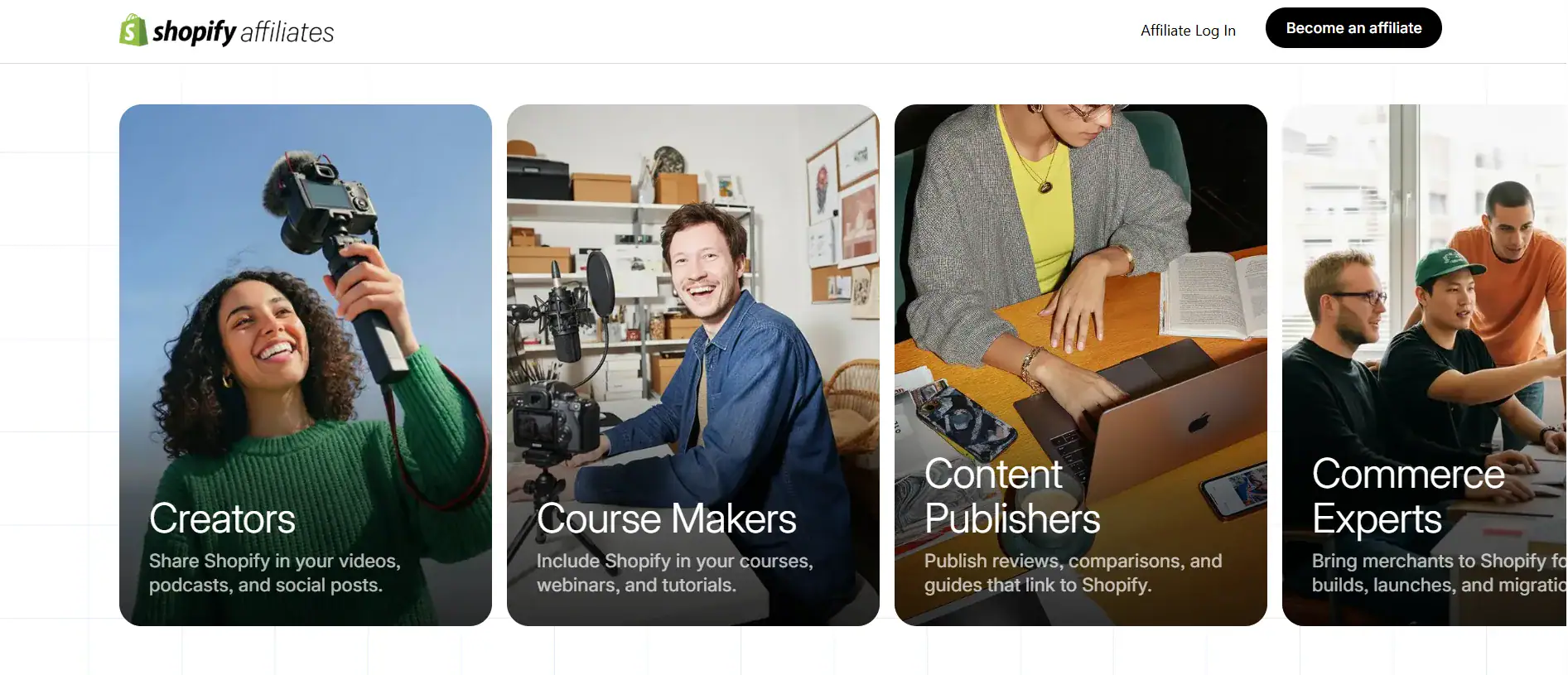
The Shopify affiliate program gives content creators, educators, bloggers, influencers, and marketing professionals the opportunity to earn money by recommending a product that genuinely helps people build businesses. Unlike many affiliate programs where you promote disposable products, Shopify referrals tend to become long-term customers, which makes the platform willing to pay generous upfront bounties.
How Does the Shopify Affiliate Program Work?
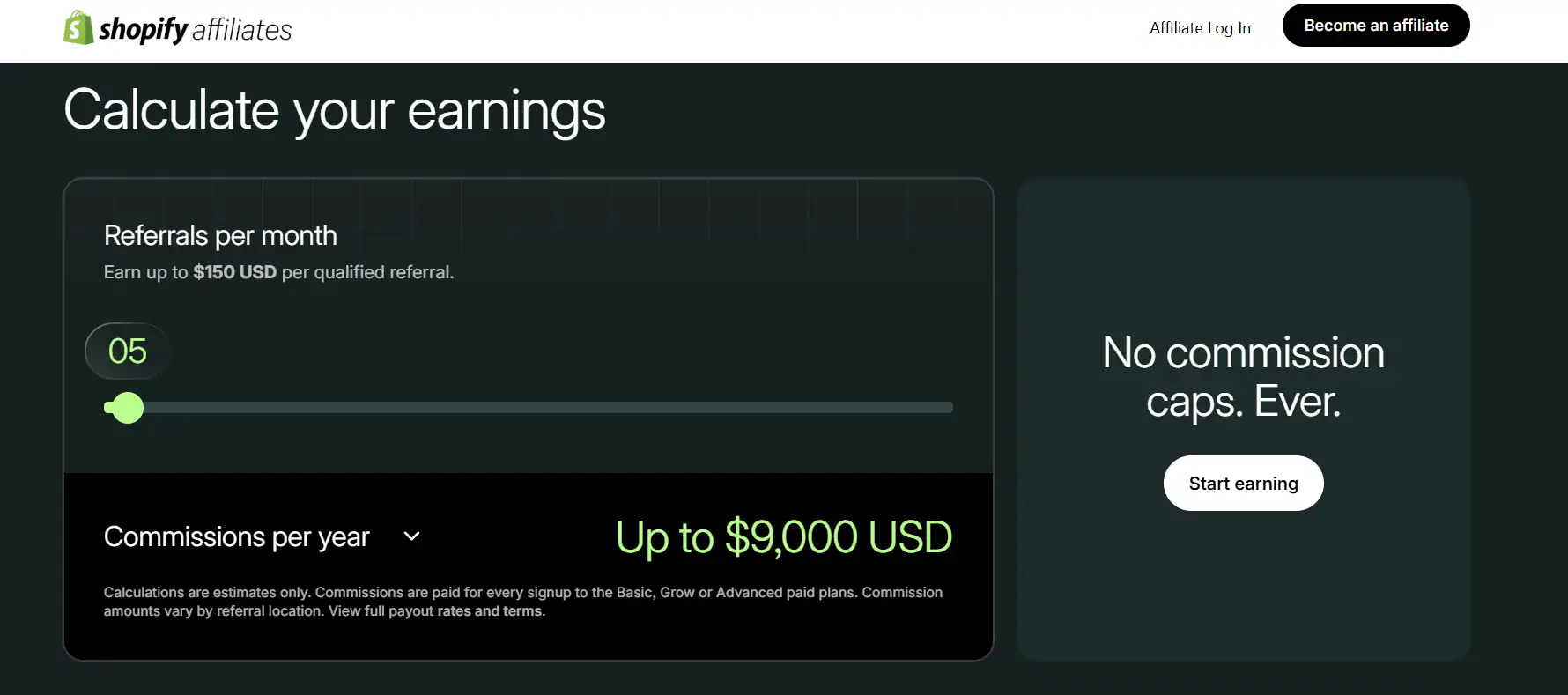
The Shopify affiliate program operates on a bounty model. When someone clicks your unique affiliate link and signs up for a paid Shopify plan, you earn a one-time commission. The exact amount depends on the plan the merchant chooses.
For standard Shopify plan referrals, the commission is approximately $58 per merchant who activates a paid plan. Some sources report bounties ranging from $58 to $150 depending on the specific plan tier. For Shopify Plus referrals, which target enterprise-level businesses, the commission jumps significantly, with payouts reaching up to $2,000 per referral. Shopify also runs periodic promotional campaigns. For example, in early 2026 they offered a $500 bonus per referred client plus 20% monthly recurring commission for up to 10 clients.
The cookie duration is 30 days. This means if someone clicks your affiliate link and signs up for a Shopify plan within 30 days, you receive credit for the referral. Given that many potential merchants research their options before committing, a 30-day window is reasonable, though some competing programs offer longer cookies.
Payments are processed twice per month through PayPal. You must have a verified PayPal account to receive your commissions. There are no monthly charges, no minimum sales requirements, and no fees to join the program.
How to Join the Shopify Affiliate Program
Joining the Shopify affiliate program requires an application, and Shopify is selective about who they accept. The review process typically takes up to 48 hours. Here is what you need to get approved.
First, you should have an established online presence. This could be a blog, YouTube channel, social media following, or educational platform. Shopify looks for applicants who create valuable content and have a genuine audience. They want affiliates who will represent the brand well, not spammers looking for quick commissions.
Second, you need to demonstrate your promotional strategy. Shopify wants to know how you plan to promote their platform. Content-based strategies like blog reviews, tutorial videos, comparison articles, and educational webinars tend to get approved more easily than generic advertising approaches.
Third, you should have a verified PayPal account since this is the only payment method available for affiliate commissions.
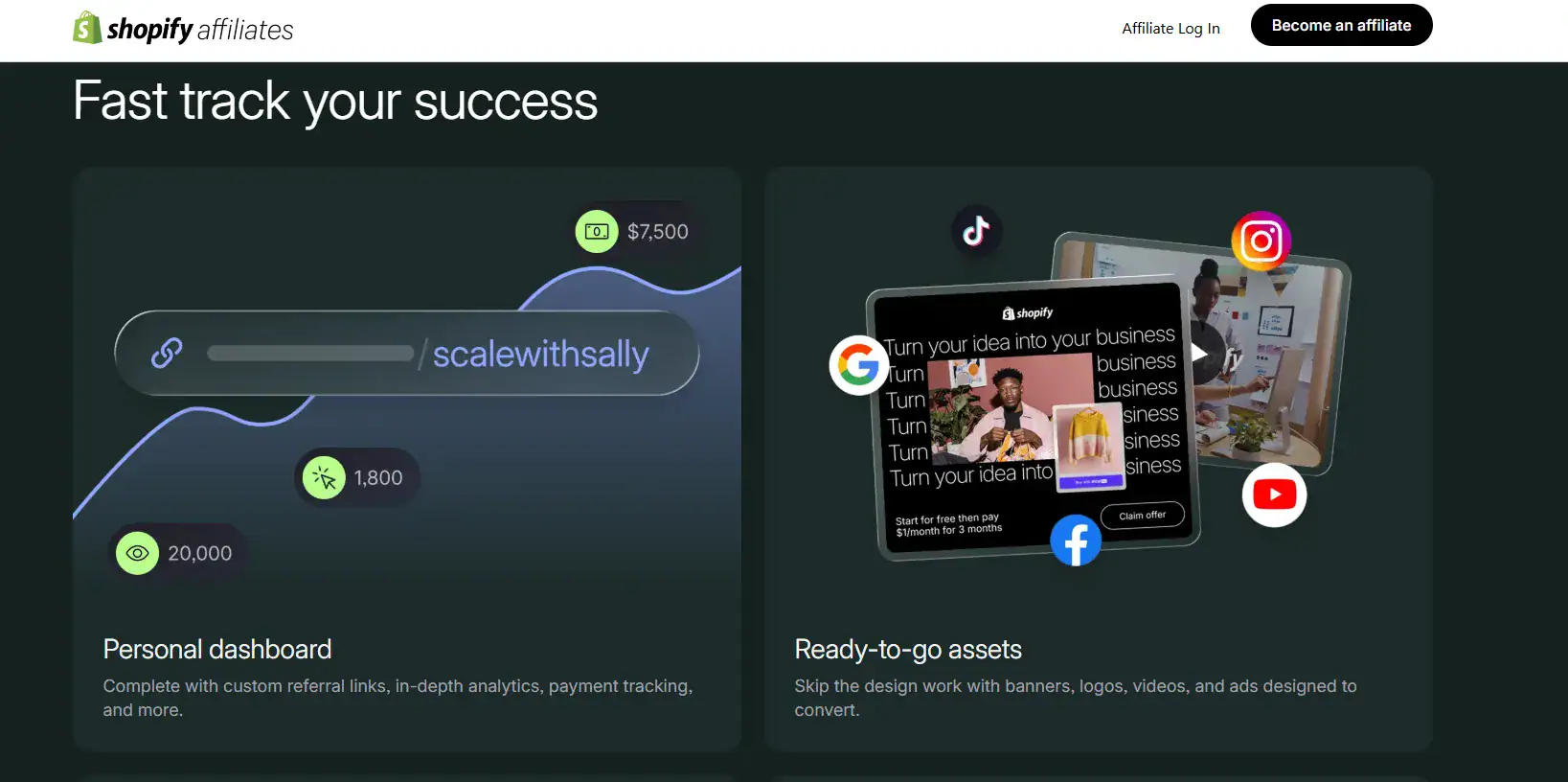
You can apply directly through Shopify’s affiliate program page or through ShareASale, which also manages the program. Once accepted, you receive your unique affiliate link, access to marketing materials, a real-time tracking dashboard, and support from a dedicated affiliate manager.
What Makes Shopify a Strong Affiliate Product to Promote?
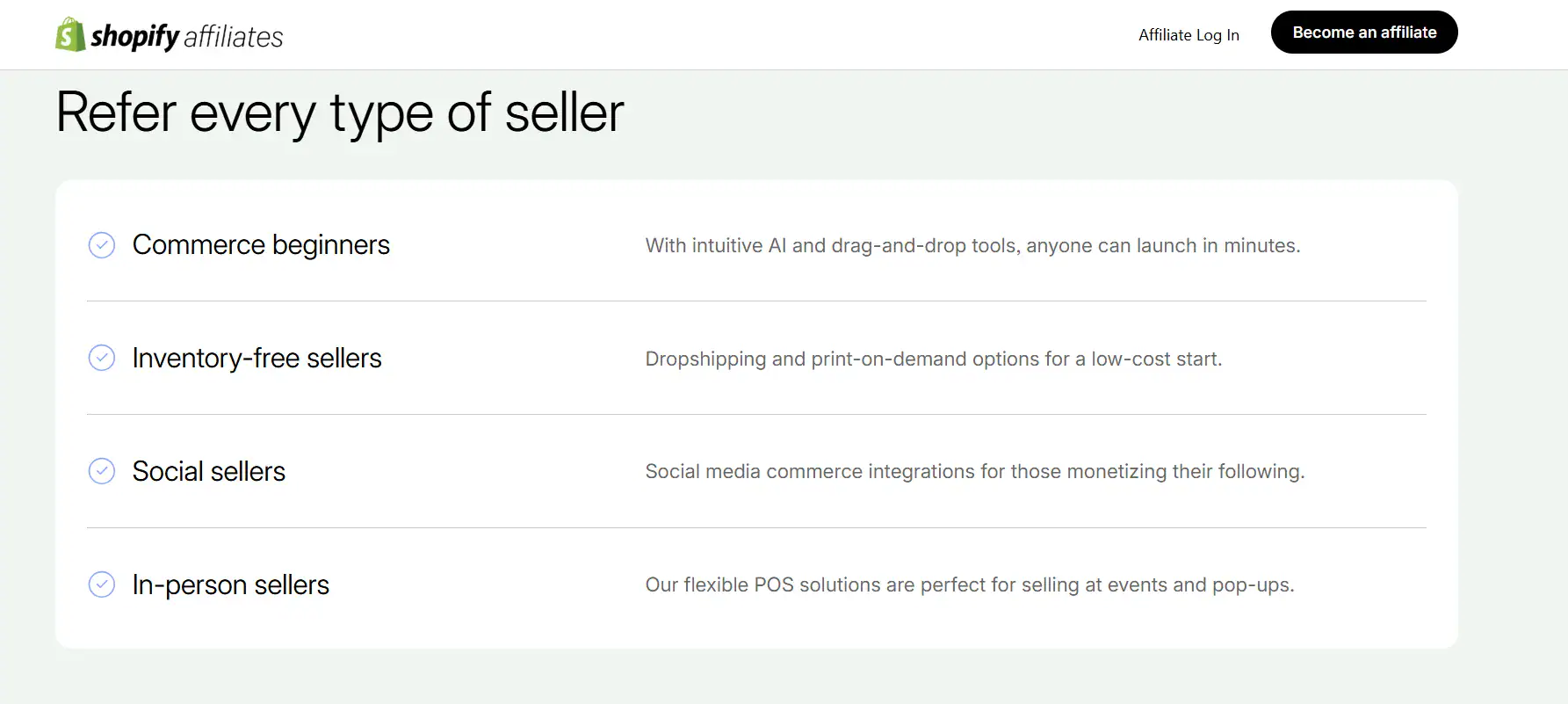
Promoting Shopify as an affiliate is advantageous for several reasons rooted in the product itself.
Brand recognition is the first major advantage. Shopify is a household name in e-commerce. When you recommend it to your audience, you do not need to spend time convincing them the company is legitimate. They have likely already heard of it, seen Shopify-powered stores, or know someone who uses it. This pre-existing trust shortens the path to conversion.
The product is genuinely excellent. Shopify provides everything a merchant needs to run an online store, including website design templates, hosting, payment processing, inventory management, shipping tools, marketing features, and analytics. The platform handles the technical complexity, which is exactly what new business owners need. When you recommend a product you can stand behind, your content carries more authenticity.
Shopify’s pricing structure works in your favor as an affiliate. Plans start at affordable monthly rates, which lowers the barrier to entry for new merchants. The 14-day free trial (or current promotional trial period) gives potential customers a risk-free way to explore the platform, which increases the likelihood they will convert to a paid plan within your 30-day cookie window.
The app store is another selling point. Shopify offers thousands of apps and integrations that extend the platform’s functionality. This means you can promote Shopify to virtually any type of business, from fashion brands and food companies to digital product sellers and service providers.
Shopify Plus targets larger enterprises with advanced features, higher customization, and dedicated support. Referring Plus merchants earns significantly higher commissions, making it worthwhile to create content targeting established businesses looking to upgrade their e-commerce infrastructure.
Shopify Statistics That Help You Sell
When promoting Shopify, having concrete statistics strengthens your content and helps convince potential referrals. Here are the key numbers as of 2026.
Shopify powers over 5.6 million active online stores worldwide. The platform has facilitated over $1.1 trillion in total sales since its founding. Annual revenue reached $8.88 billion in 2024 with 26% year-over-year growth. Merchant solutions revenue accounted for $6.53 billion, representing 73.54% of total revenue. Shopify Plus merchants experience an average 126% increase in revenue year-over-year. The platform supports over 175 countries and multiple currencies and languages.
These statistics demonstrate that Shopify is not just surviving but thriving. When your audience sees this data, it reinforces the decision to choose Shopify over competitors.
Best Content Strategies for Promoting Shopify
The most effective way to earn consistent Shopify affiliate commissions is through content marketing. Here are the strategies that work best.
Tutorial content performs exceptionally well. Articles and videos that walk people through setting up a Shopify store, choosing a theme, adding products, and launching step by step attract audiences who are ready to take action. These people are in the buying mindset, which means they are more likely to click your affiliate link and sign up.
Comparison content drives high-intent traffic. Articles comparing Shopify vs. WooCommerce, Shopify vs. BigCommerce, or Shopify vs. Wix attract people who have already decided to build an online store and are choosing between platforms. By providing honest, balanced comparisons, you build trust and guide readers toward the platform you recommend.

Success story content inspires action. Sharing real examples of businesses that have succeeded on Shopify motivates your audience to start their own stores. Include specific numbers when possible, such as revenue figures or growth rates, to make the stories compelling.
Educational content establishes your authority. Writing about e-commerce strategies, dropshipping tips, product sourcing advice, and marketing techniques positions you as an expert. When you recommend Shopify within this educational context, the recommendation feels natural and trustworthy.
SEO-focused content delivers long-term results. Target keywords like “how to start an online store,” “best e-commerce platform for beginners,” “Shopify review,” and “Shopify pricing” to capture organic search traffic. These keywords attract people who are actively researching their options and are primed for conversion.
Shopify Affiliate Program Pros and Cons
Pros
- The brand recognition makes conversions easier than with lesser-known products. Commission rates are competitive, especially for Shopify Plus referrals. The program is completely free to join with no minimum sales requirements. Real-time tracking and dedicated affiliate manager support help you optimize your campaigns. Payments are made twice monthly. The product is genuinely helpful, which makes promoting it feel authentic.
Cons
- The 30-day cookie duration is shorter than some competing programs. PayPal is the only payment method, which may be inconvenient for some affiliates. The application process is selective, and not everyone gets approved. Commission is a one-time bounty rather than recurring for standard referrals, though promotional periods may offer recurring elements.
FAQs
How much can I earn with the Shopify affiliate program?
Standard plan referrals earn approximately $58 per signup, while Shopify Plus referrals earn up to $2,000. Promotional campaigns can offer additional bonuses. Top affiliates earning consistent traffic can make thousands per month.
Is the Shopify affiliate program free to join?
Yes, there are no fees to join and no monthly charges. You earn commissions purely from successful referrals.
How long does the affiliate cookie last?
The cookie duration is 30 days. If someone clicks your link and signs up for a paid plan within that window, you earn the commission.
How do I get approved?
Have an established online presence with valuable content, demonstrate your promotional strategy, and maintain a verified PayPal account. Approval typically takes up to 48 hours.
Can beginners join the Shopify affiliate program?
While beginners can apply, Shopify favors applicants with existing audiences and content. Build up your blog or social media presence first, then apply when you have a solid foundation.
Conclusion: Shopify Affiliate Program Review 2026: Complete Guide to Earning Commissions
The Shopify affiliate program is one of the most reliable and well-paying programs in the e-commerce space. With Shopify generating $8.88 billion in annual revenue and powering over 5.6 million stores, you are promoting a product that is genuinely used and trusted by millions. The combination of strong brand recognition, competitive commissions, dedicated support, and an excellent product makes this program a strong choice for content creators and marketers who serve entrepreneurial audiences. If you create helpful content that guides people toward building online businesses, the Shopify affiliate program can become a consistent and meaningful revenue stream.