
The creator economy has grown faster than almost anyone predicted, and the numbers are now big enough that every affiliate marketer needs to have a clear position on how it affects their business. Whether you are a solo creator, a publisher running multiple sites, or a brand working with affiliates — this expansion reshapes the economics of online publishing in ways that are hard to ignore.
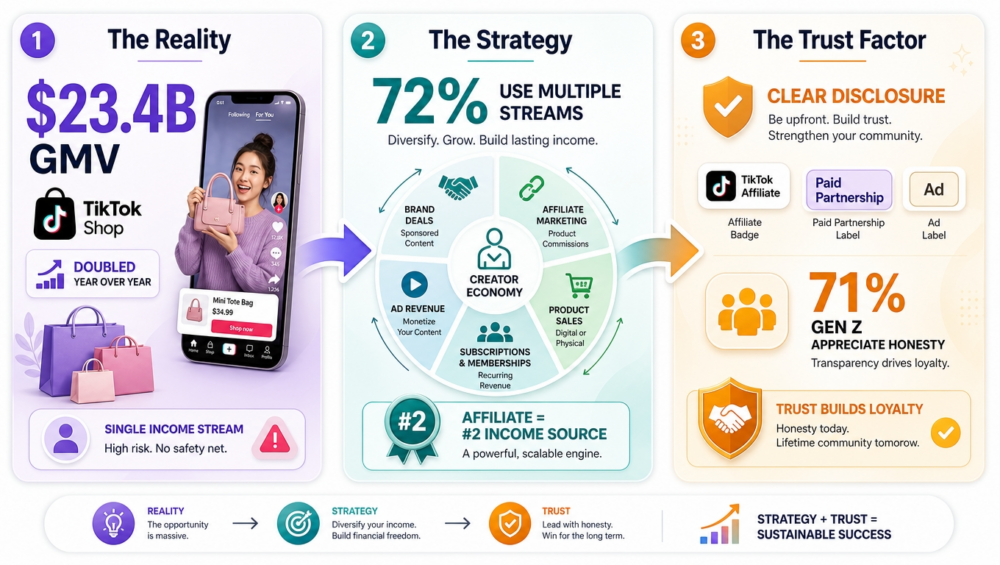
The creator economy has grown from a $250 billion industry in 2023 to an estimated $500+ billion in 2026. The growth story is less about more creators entering the space and more about how the business models underpinning the creator economy have fundamentally matured. Top creators are operating diversified media businesses with multiple revenue streams: content, products, licensing, events, and equity deals.
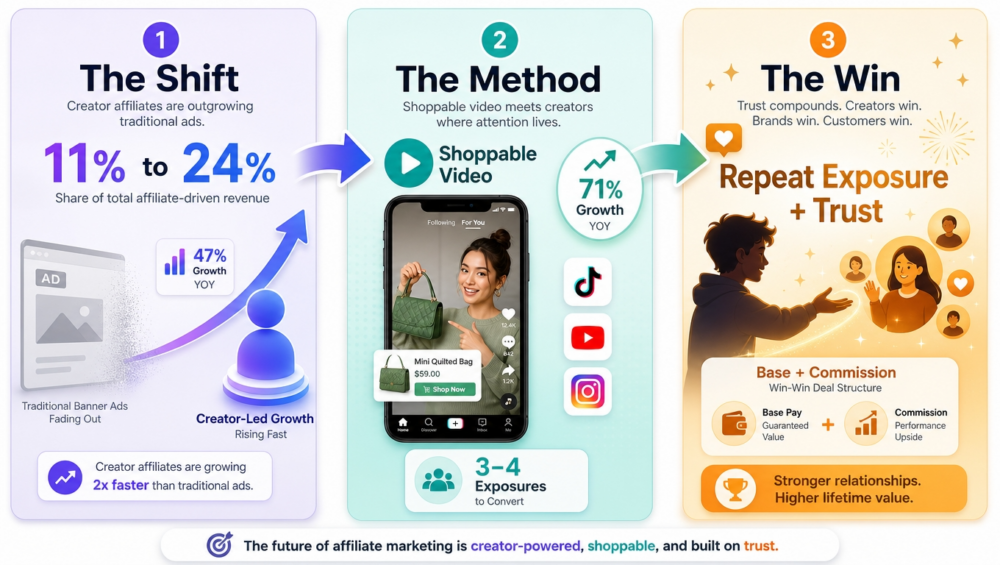
This is a different world from the one affiliate marketers were operating in five years ago. Back then, a creator was someone who made videos or wrote blog posts and slapped some affiliate links in the description. Now a creator is running a media company that treats affiliate income as one revenue stream among many.
Content Outline
The micro-influencer opportunity
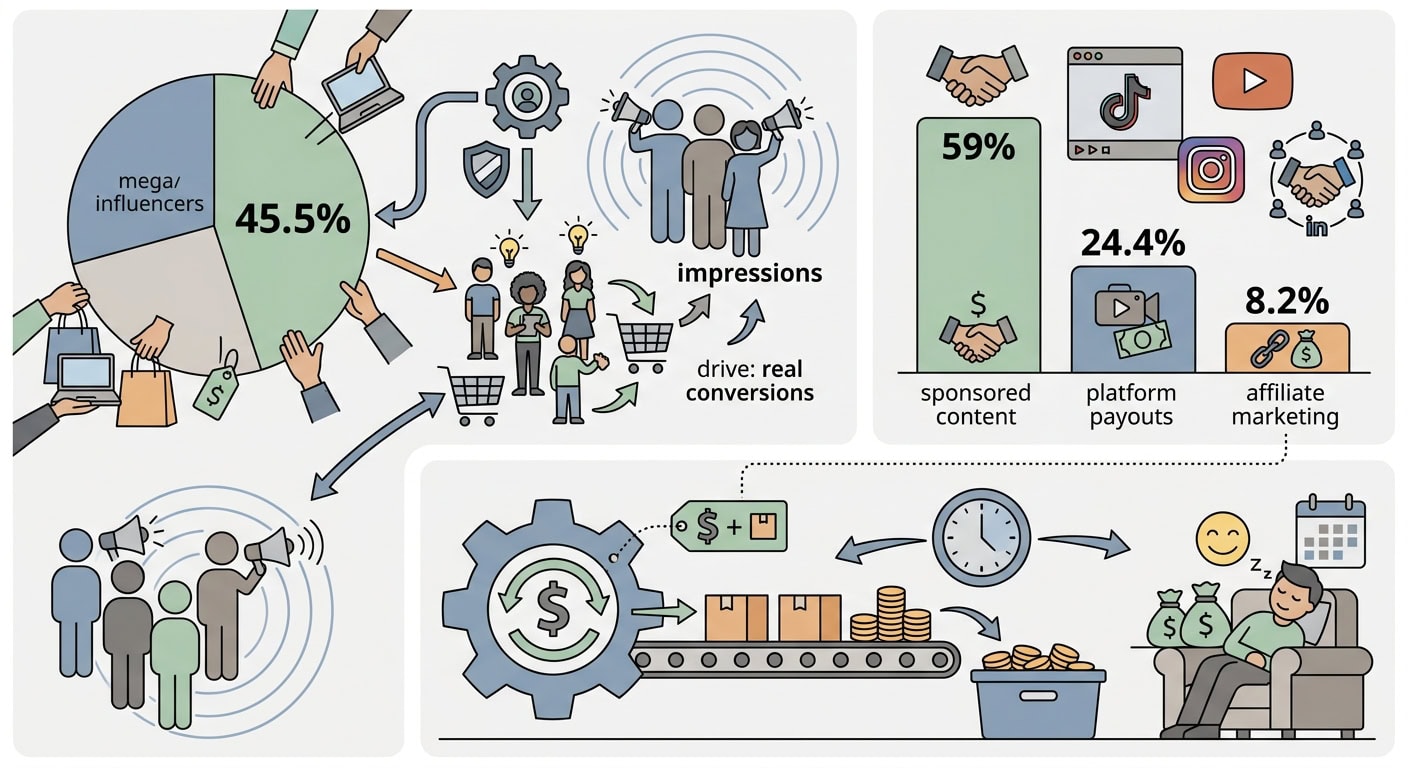
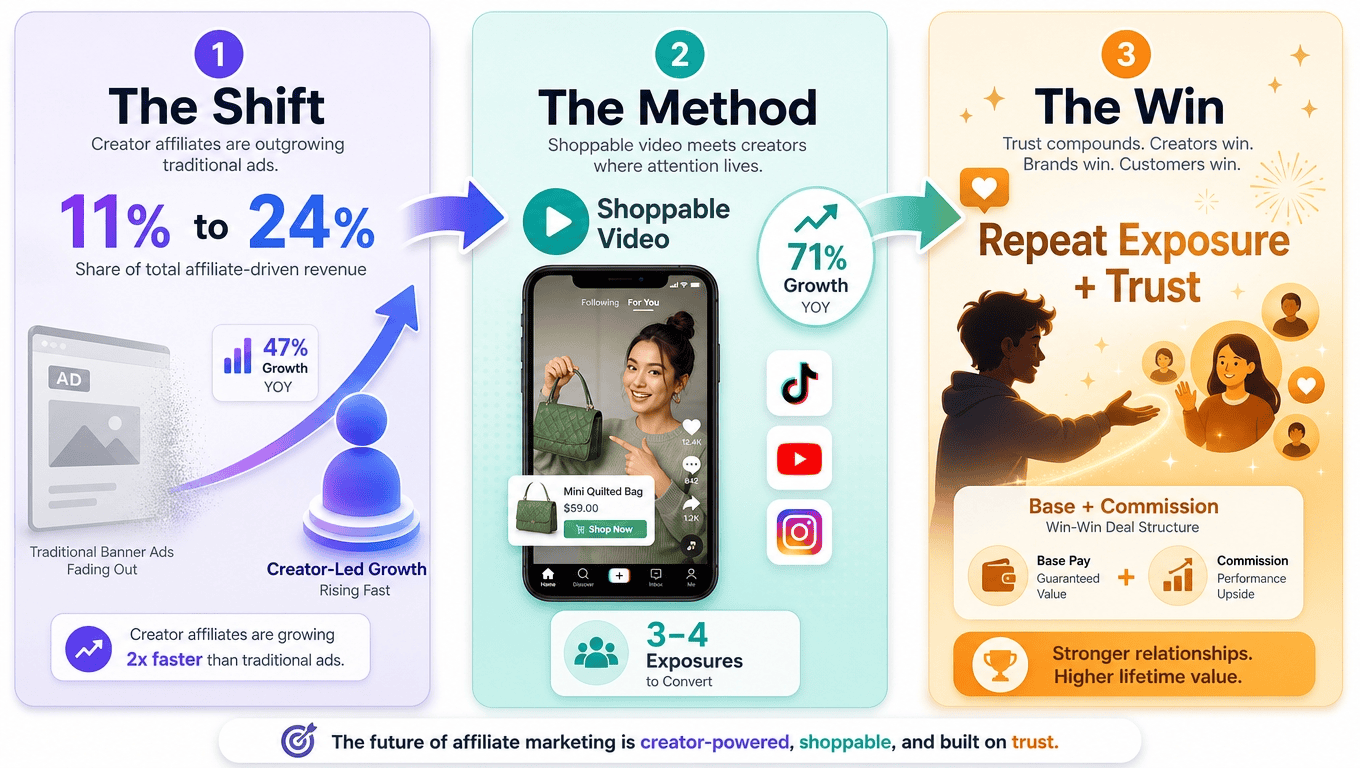
Micro- and nano-influencers will claim 45.5% of influencer marketing spending in 2026. As brands incorporate creators into more of their marketing strategies, the space is becoming more competitive and complex. This is genuinely good news for smaller affiliate operations. It means brands are not just chasing the big names — they are actively looking for niche creators with engaged audiences who can drive real conversions, not just impressions.eMarketer
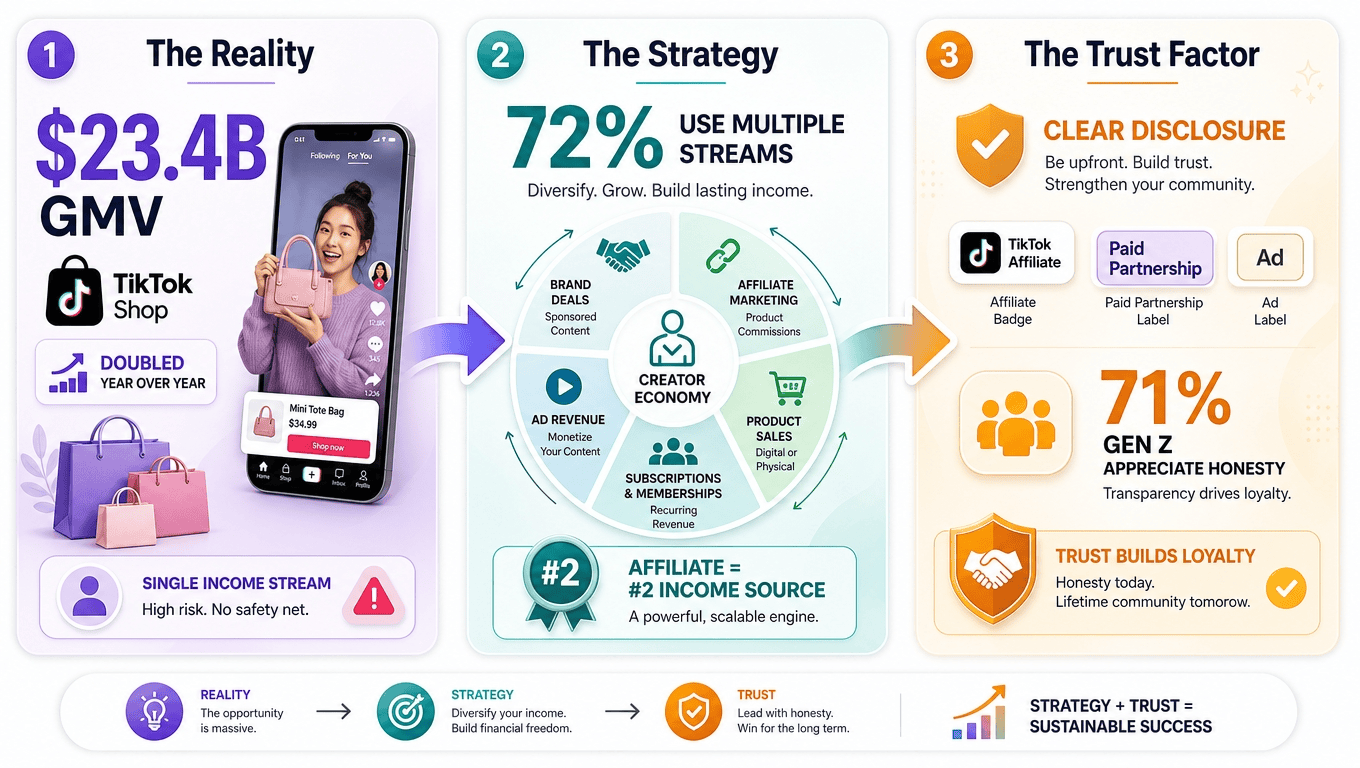
In 2026, creators earn most of their revenue (59%) from sponsored content, followed by platform payouts at 24.4% and affiliate marketing at 8.2%, according to EMARKETER forecasts. TikTok, YouTube, and Instagram remain dominant platforms for sponsorships, and LinkedIn has emerged as a hub for B2B creators.eMarketer
The affiliate share at 8.2% might look small, but on a $500 billion market that is still a significant number. More importantly, affiliate income is often the most passive and scalable part of a creator’s revenue — it keeps earning long after the content is published.
Compliance is now a real issue
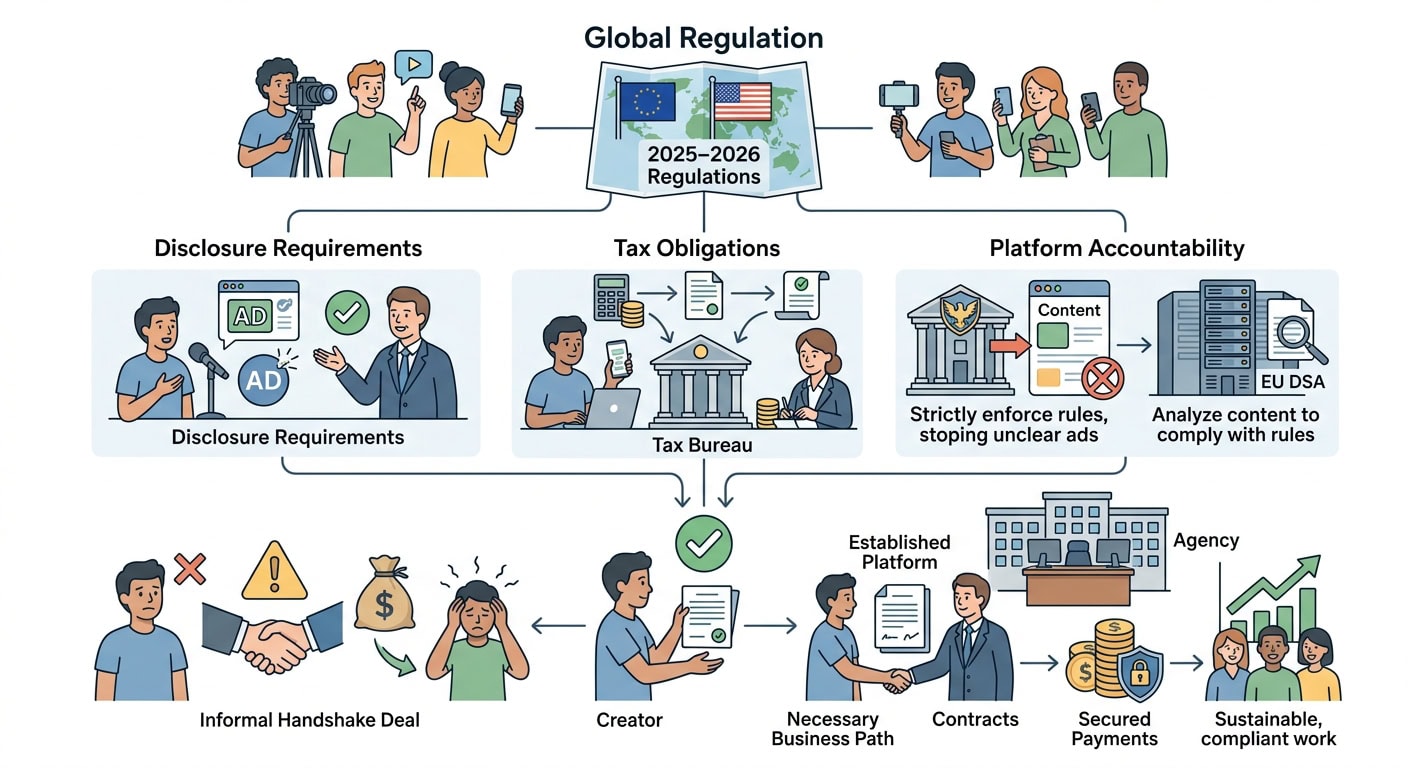
Multiple countries have introduced creator economy regulations in 2025–2026, covering disclosure requirements, tax obligations, and platform accountability. The FTC has tightened enforcement on undisclosed sponsorships, and the EU’s Digital Services Act now applies to creator content. Working through established platforms and agencies rather than informal handshake deals is becoming a business necessity.
💬 Reddit signal: r/Creator_Economy and r/blogging are both seeing threads about compliance anxiety. The most upvoted comments point to a clear theme — undisclosed affiliate relationships are becoming a serious risk, not just an FTC technicality. Transparency is now a trust-building strategy, not just a legal checkbox.
🐦 Twitter/X signal: Creators on X are openly discussing the shift from “how do I grow followers” to “how do I build a business.” The most-shared threads are about diversifying revenue, owning your audience through email, and treating affiliate income as infrastructure rather than a primary strategy.
The opportunity in the creator economy for affiliate marketers is real and growing. But the playbook has changed. You need compliance, diversification, genuine authority, and a real audience — not just traffic. The creators who understand this are building businesses that will last. The ones who do not are building houses on borrowed land.
Quick Links: