
The influencer marketing industry hit $32.55 billion in 2026 — up 35.6% from $24 billion in 2024. But the headline number hides a more interesting story: where the growth is coming from, which creator tiers are driving real results, and why the industry is rapidly moving from flat-fee brand deals to performance-based commission structures.
This article covers 100+ data points from Aspire’s State of Influencer Marketing 2026, Influencer Marketing Hub’s Benchmark Report, Sprout Social, Impact.com, and primary survey data from 900+ marketers and creators.
Content Outline
Key Influencer Marketing Statistics 2026
Metric | Number |
Global influencer marketing market size | $32.55 billion |
Projected size by 2030 | $52.1 billion |
Industry CAGR (2016–2026) | 33.11% |
Average ROI per $1 spent | $5.78 |
Top campaign ROI | $11–$18 per $1 |
Brands finding influencer marketing effective | 83% |
Marketers increasing influencer budgets in 2026 | 74% |
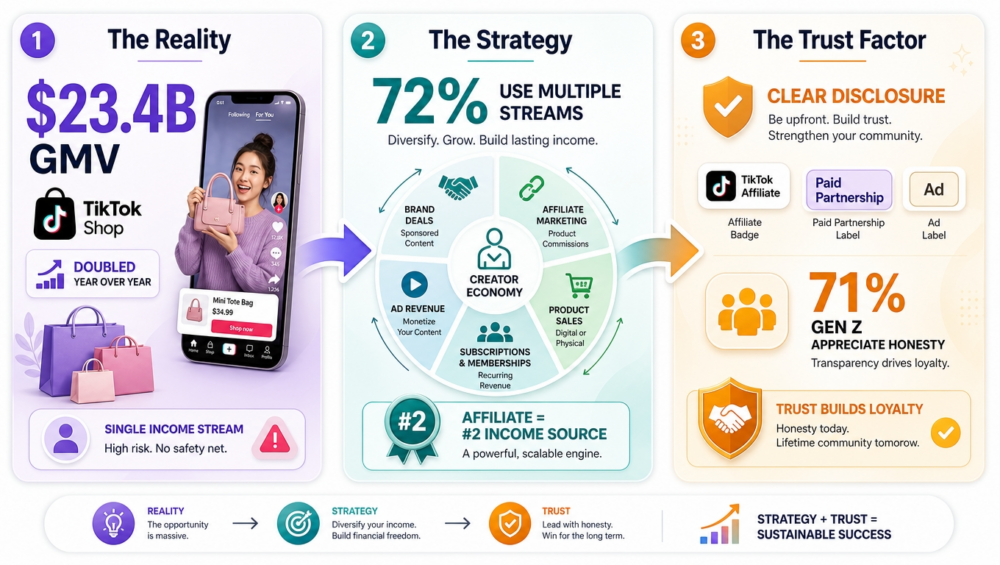
Brands using or planning to use TikTok Shop | 50%+ |
Brands preferring micro/mid-tier creators | 73% |
Micro-influencer engagement vs mega | 3.2x higher |
Micro-influencer cost vs mega | 60% lower |
Nano-influencer TikTok engagement rate | 10.3% |
Influencer content vs branded content ROI | 11x higher |
Consumers making influencer-inspired purchases | 86% annually |
Influencer leads vs other channel quality | 82% of marketers say influencer leads are higher quality |
Campaigns using performance-based compensation | 25–53% |
Brands using long-term ambassador programs | Growing — highest ROI category |
Influencer fraud rate (fake followers) | 59.8% of brands report exposure |
Market Size and Growth: The Fastest-Growing Marketing Channel
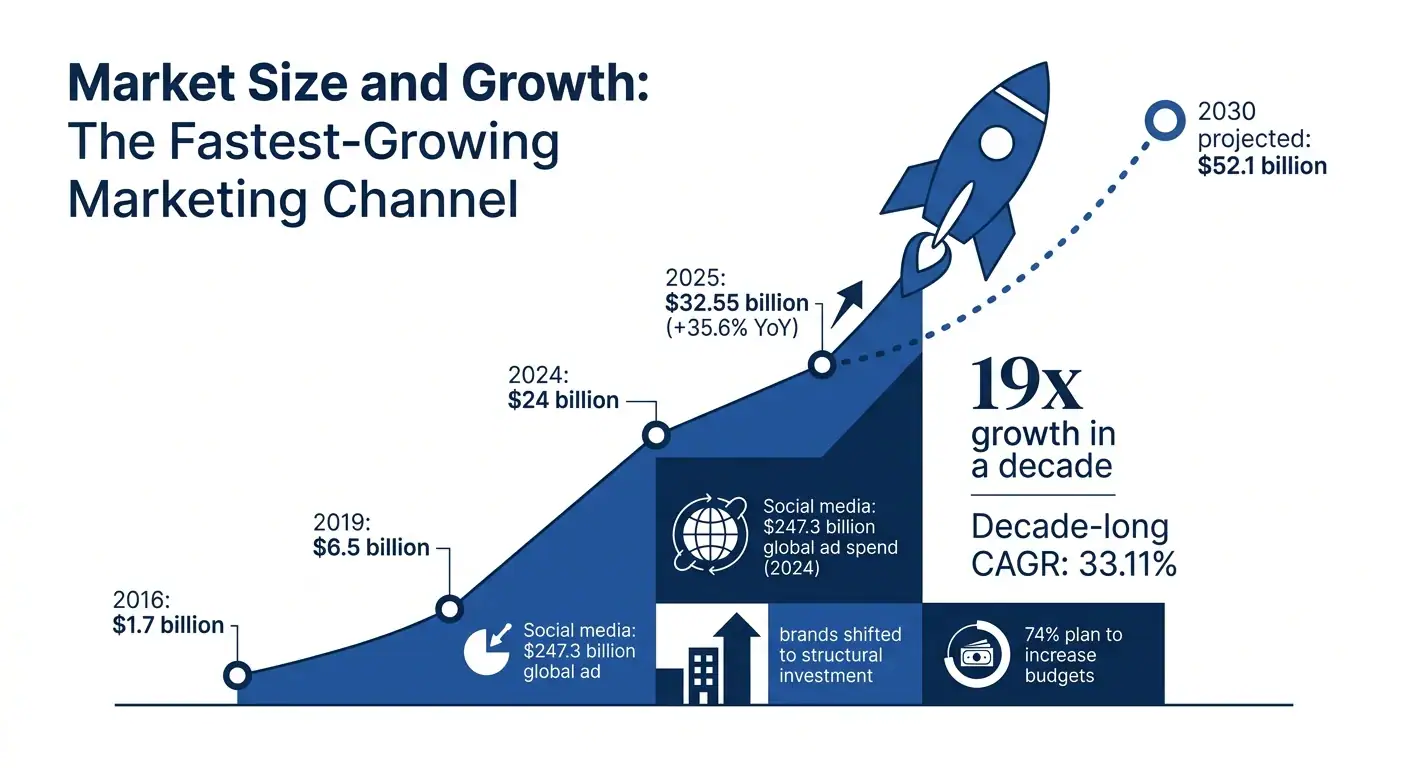
Influencer marketing grew from a $1.7 billion niche in 2016 to a $32.55 billion industry in 2026 — 19x growth in a decade. The decade-long CAGR is 33.11%, making it one of the fastest-growing channels in marketing history.
Growth trajectory:
2016: $1.7 billion
2019: $6.5 billion
2024: $24 billion
2025: $32.55 billion (+35.6% YoY)
2030 projected: $52.1 billion
Social media surpassed paid search as the world’s largest advertising channel in 2024, reaching $247.3 billion in global ad spend. Influencer marketing is the primary driver of growth within the social layer — brands have shifted from experimental to structural investment in creator partnerships.
74% of marketers plan to increase influencer budgets in 2026. This is the Aspire State of Influencer Marketing 2026 finding — aggressive expansion even amid broader economic scrutiny. The reversal from the 10% budget decrease seen in 2025 reflects renewed confidence backed by attribution data.
ROI: What the Numbers Actually Show
Influencer marketing delivers an average $5.78 for every $1 spent. Top-performing campaigns achieve $11–$18 ROI. The industry average outperforms:
Display advertising: ~$2 per $1 spent
Paid social (non-influencer): ~$4 per $1 spent
Traditional digital advertising: Influencer delivers 11x higher ROI than comparable digital ads
What drives the performance gap:
61% of consumers trust influencer recommendations vs 38% who trust branded social content
70% of teenagers trust influencers more than traditional celebrities
86% of consumers make at least one influencer-inspired purchase per year
82% of marketers say influencer-sourced leads are higher quality than other channels
The trust differential is structural. Consumers give influencer recommendations significantly more weight than branded content because they perceive the creator as an independent voice — even when the relationship is commercial.
83% of brands report their influencer campaigns as effective or very effective. Only 5% report negative experiences. This is a remarkably high satisfaction rate for a marketing channel at this scale.
Micro vs Macro: Where the Data Points
This is the most consistent finding across every major 2026 influencer marketing report: smaller creators outperform larger ones on the metrics that drive actual results.
Creator Tier | Followers | Avg Instagram Post Cost | Avg Engagement | Notes |
Nano | 1K–10K | $10–$100 | ~4–6% | 39% of brands chose nano in 2025 |
Micro | 10K–100K | $100–$1,000 | 3.86% | 3.2x higher than mega; 60% cheaper |
Mid-tier | 100K–500K | $1,000–$5,000 | 2–3% | 32% of brands investing here |
Macro | 500K–1M | $5,000–$10,000 | 1.5–2% | Declining brand preference |
Mega | 1M+ | $10,000+ | 1.21% | Lowest engagement; brand awareness only |
Micro-influencer advantage in numbers:
3.2x higher engagement rate than mega-influencers
60% lower cost per post
73% of brands now prefer micro or mid-tier creators
52.83% of brands expanding (not just maintaining) micro-influencer activity
Nano-influencers achieve 10.3% engagement on TikTok — dramatically higher than larger accounts
The performance gap is widening as audiences increasingly reward perceived authenticity. Mega-influencer campaigns make sense for brand awareness at scale. For performance outcomes — conversions, sales, affiliate clicks — micro and nano creators consistently deliver better results per dollar spent.
Gifted collaborations vs paid: Gifted partnerships deliver 2.19% engagement — 12.9% higher than paid collaborations at 1.94%. Particularly effective with nano and micro-influencers who value product alignment over flat fees.
Platform Performance: Where the Budget Is Going
Platform | Brand Preference | US Spend | Key Advantage |
57% #1 preference | $2.21 billion | Mature creator ecosystem, commerce | |
TikTok | 52% (despite restrictions) | Growing | Purchase intent — 78% of users buy after creator content |
YouTube | High for long-form | Included in video | 3.2x higher purchase intent than display |
Growing — B2B | Underexploited | B2B influencer ROI underreported | |
Snapchat | Niche | Smaller share | Younger demographics |
Product-specific | Stable | High purchase intent in lifestyle niches |
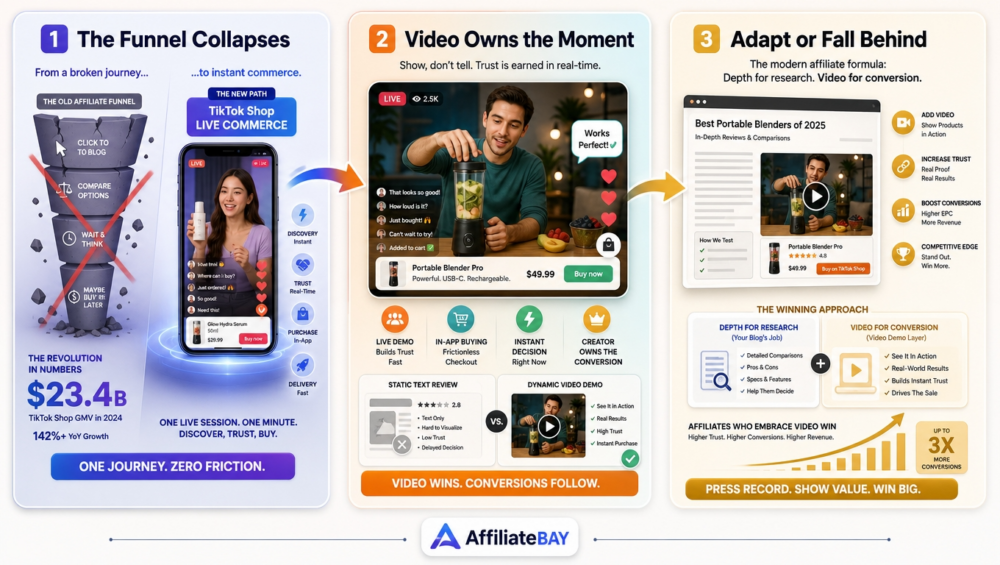
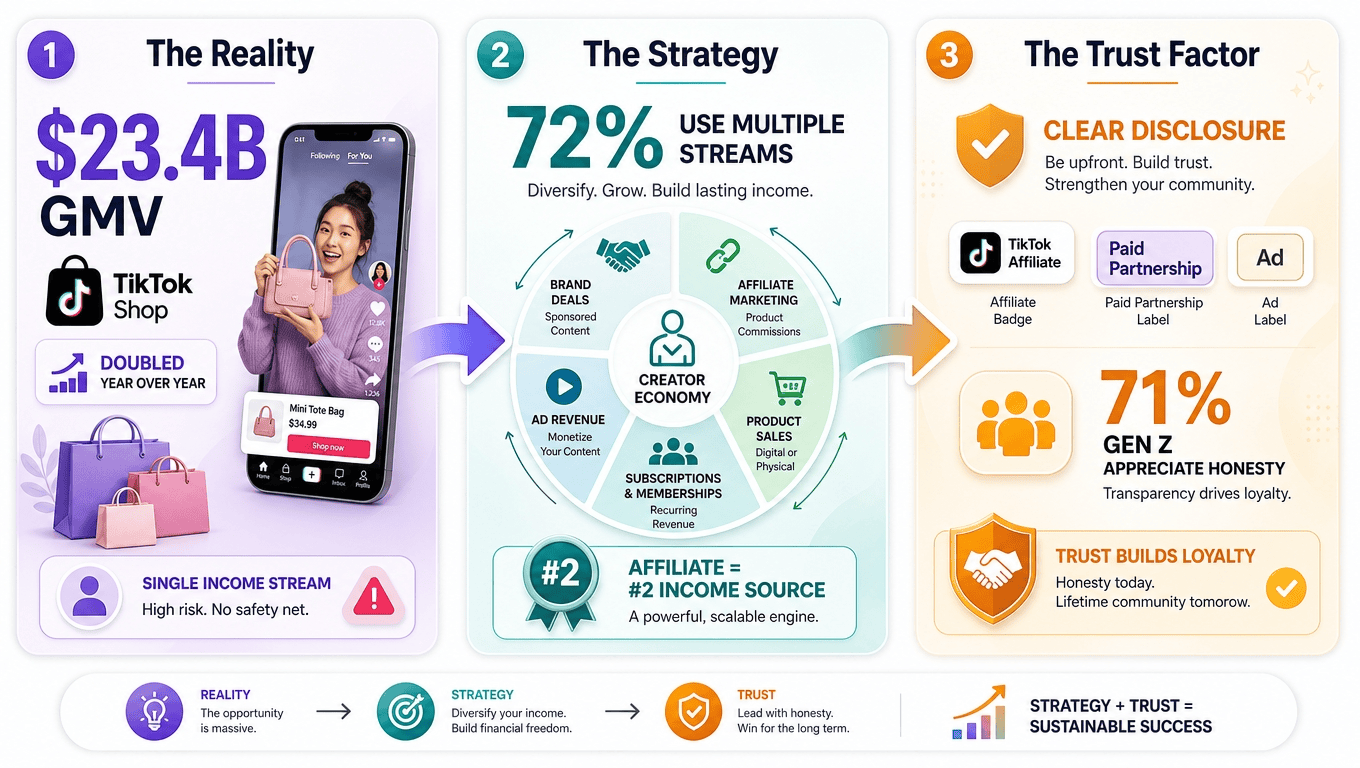
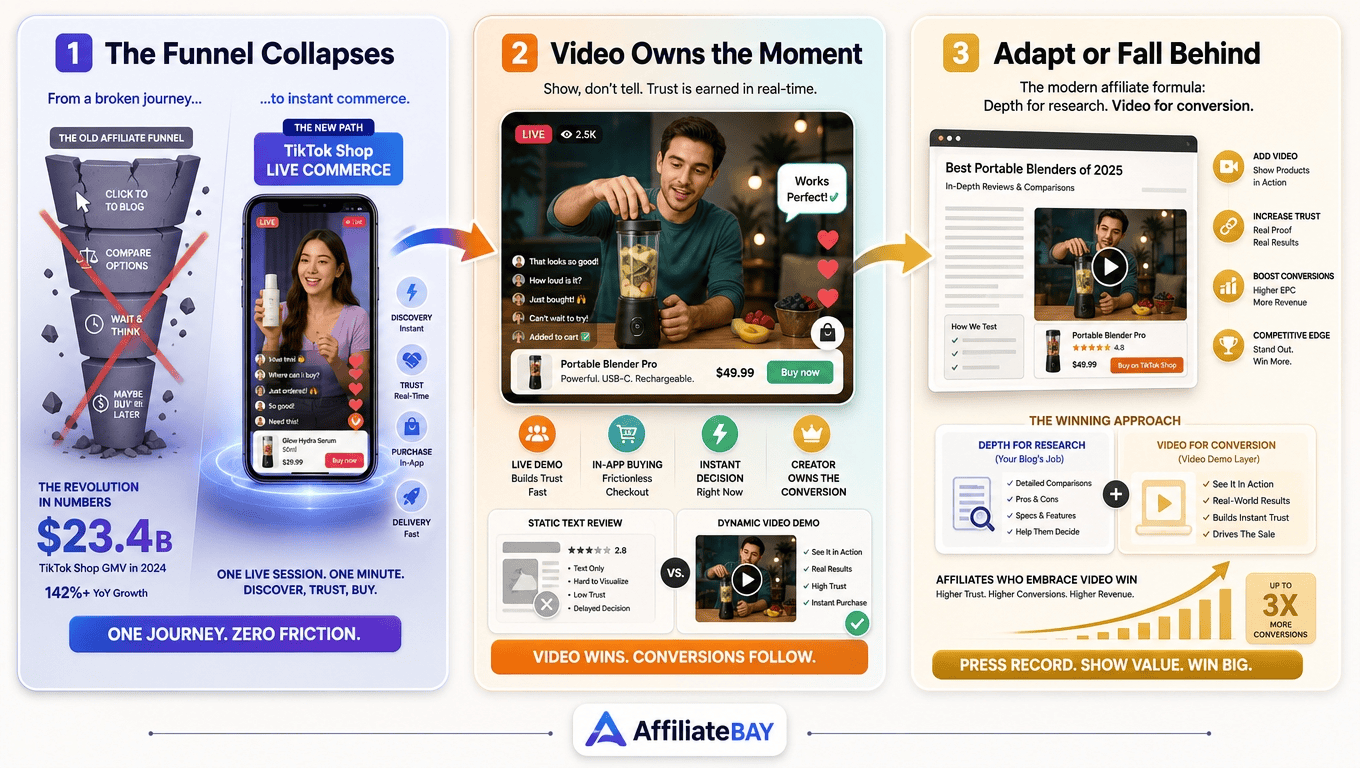
TikTok Shop is the fastest-moving story in influencer commerce: More than half of brands are already using or planning to use TikTok Shop. Creators who showcase products directly in content and link to purchase are achieving some of the highest conversion rates in the affiliate space. TikTok’s algorithm rewards product discovery content with organic reach that other platforms charge for.
Brands using influencer content as paid ads consistently see 2–3x higher engagement and lower CPAs than brand-generated creative. This amplification model — where influencer content is repurposed as paid media — is one of the highest-ROI tactics available in 2026.
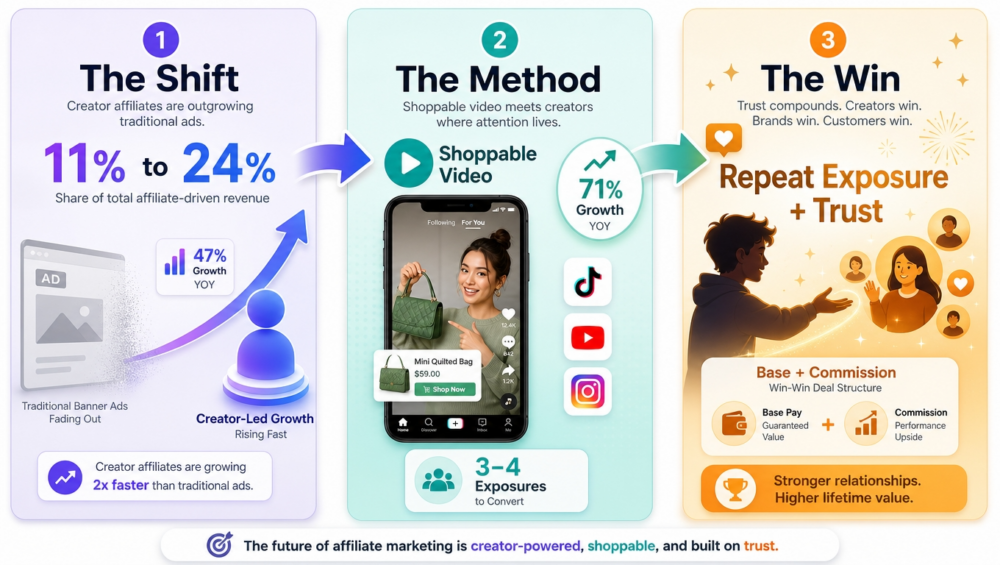
The Shift to Performance-Based Pay: Commission + Fees
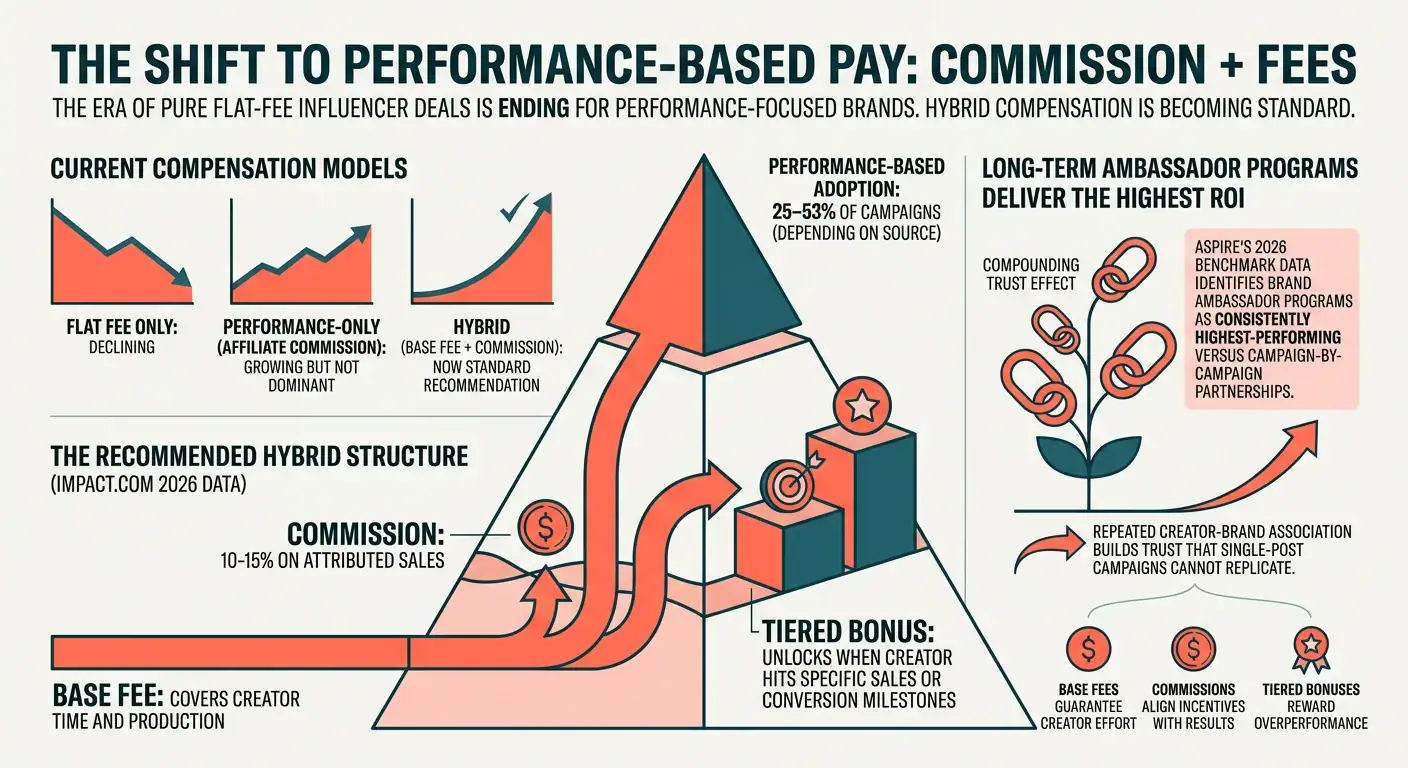
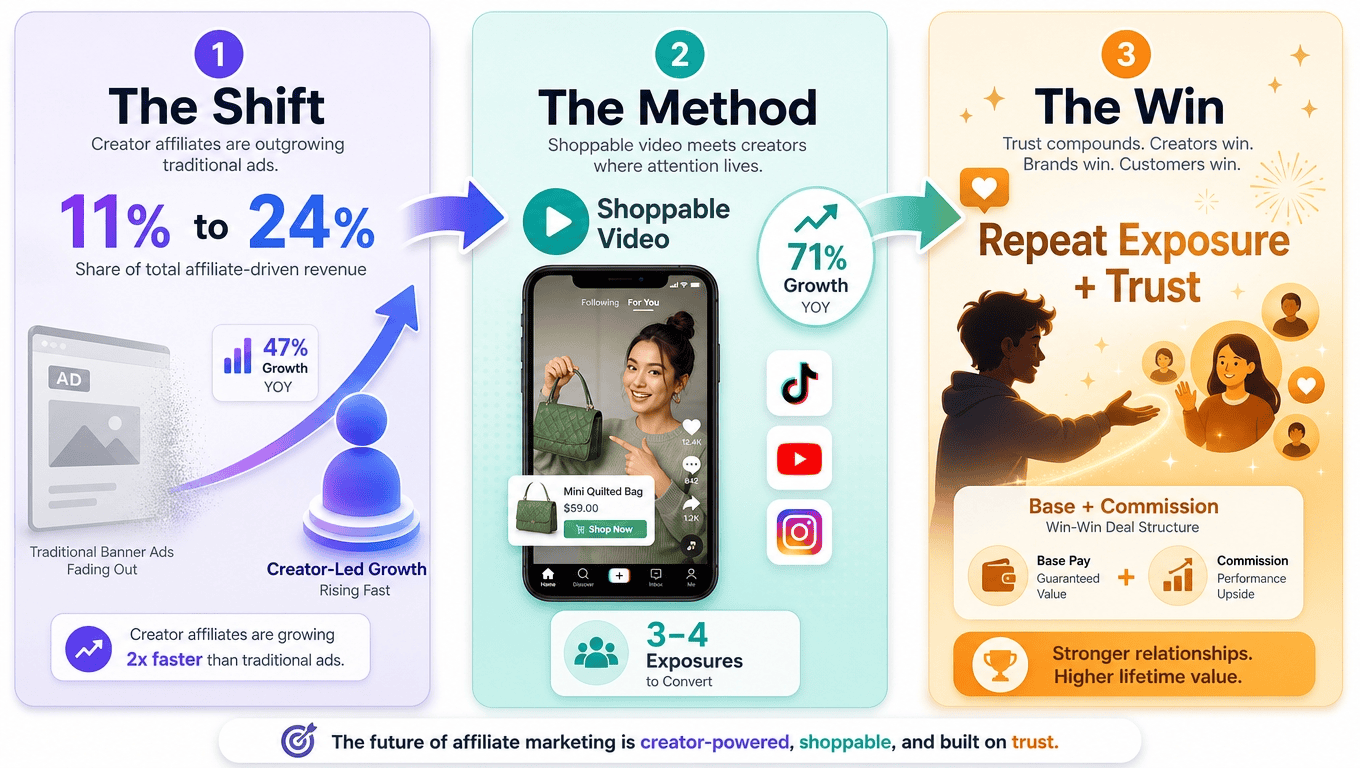
The era of pure flat-fee influencer deals is ending for performance-focused brands. Hybrid compensation is becoming standard.
Current compensation models:
Flat fee only: Declining
Performance-only (affiliate commission): Growing but not dominant
Hybrid (base fee + commission): Now standard recommendation
Performance-based adoption: 25–53% of campaigns (depending on source)
The recommended hybrid structure (Impact.com 2026 data):
Base fee: Covers creator time and production
Commission: 10–15% on attributed sales
Tiered bonus: Unlocks when creator hits specific sales or conversion milestones
Brands amplifying influencer content as paid ads and using hybrid pay structures consistently see the best outcomes: base fees guarantee creator effort, commissions align incentives with results, and tiered bonuses reward overperformance.
Long-term ambassador programs deliver the highest ROI — Aspire’s 2026 benchmark data identifies brand ambassador programs as consistently highest-performing versus campaign-by-campaign partnerships. The compounding effect of repeated creator-brand association builds trust that single-post campaigns cannot replicate.
The Fraud Problem: 59.8% of Brands Report Exposure
Influencer fraud — fake followers, synthetic engagement, bot-driven metrics — affects nearly 60% of brands running influencer campaigns.
59.8% of brands report exposure to influencer fraud (fake followers, synthetic engagement pods)
Fraudulent follower purchases are still common across all platforms
Bot engagement artificially inflates reach metrics without influencing real purchase decisions
Manual audit of 8 million influencer accounts (Localogy) reveals the true scale of fake metrics
Detection best practices in 2026:
Use AI-powered audience verification before deploying capital
Track conversion metrics, not just engagement metrics
Verify follower authenticity through third-party tools
Prioritise long-term partners with proven conversion history over new accounts with impressive-looking metrics
FAQs
Brands earn an average of $5.78 for every $1 spent on influencer marketing, with top-performing campaigns returning between $11 and $18. Influencer marketing also delivers 11x higher ROI than comparable traditional digital advertising.
Yes, micro-influencers generate 3.2x higher engagement rates at 60% lower cost, which is why 73% of brands now prefer micro or mid-tier creators. Macro and mega influencers remain valuable when the primary goal is brand awareness at massive scale.
Rates vary widely by audience size: nano influencers charge $10–$100 per post, micro $100–$1,000, mid-tier $1,000–$5,000, macro $5,000–$10,000, and mega influencers $10,000 or more. Adding a 10–15% performance commission creates a hybrid model that aligns creator incentives with your campaign results.
Use AI-driven vetting tools to verify audience authenticity before signing any partnership, and prioritise creators with proven conversion histories over those with high reach alone. Tracking conversions at the campaign level rather than relying on reach and impressions is the most reliable way to measure genuine performance.
Yes, 71% of influencers offer discounts for longer-term collaborations, making ongoing partnerships more cost-efficient than one-off sponsored posts. Committing to a series of campaigns also builds stronger creator relationships, which typically improves content authenticity and audience trust.